SERMON SPOTLIGHT * 10/04/26
Out of divine love, He decided not to give you what you deserve for your sin—eternal judgment. That’s what we call MERCY, and it’s the focus of today's passage. Below is an outline summary of the sermon for your further study and deeper reflection.
SERIES: ROMANS: The Power of God in the Gospel of Jesus Christ
TEXT: Romans 9:14-18
TITLE: Sweet Mercy
PREACHER: Derek Overstreet
POINTS:
I. Moses and the Golden Calf
II. Pharaoh’s Hard Heart
SERMON EXCERPTS:
All quotes and text emphasis are taken directly from the pastor’s notes.
ILLUSTRATION: People running from God toward a cliff to hell
“Out of billions lost, God chose to stop you on your hell-bound path and bring you to Himself. You didn’t deserve to be saved. God wasn’t obligated to save you. Out of divine love, He decided not to give you what you deserve for your sin—eternal judgment. That’s what we call MERCY, and it’s the focus of today's passage.”
“In 6-13, Paul explained that God chose Isaac and Jacob over Ishmael and Esau—here’s the kicker—apart from any human qualities or influence. Their redemption was purely God’s choice.”
“To the natural mind, that seems unjust. Like the Yankees taking the field at Fenway, the moment Paul finishes 13, he can hear the hisses and boos. If God is truly just, He must choose one and reject the other based on something within the individual. What could be more fair than that? But reaching out to grab some but not others, without regard for anything in the individual, seems monstrously unfair. It makes God look arbitrary, capricious, and even unrighteous.”
“Paul knows the human heart, so he anticipates the objection. So in 14, look at it with me. In response to 10-13, he says—What shall we say then? Is there injustice on God’s part? Paul’s response—By no means! We could say—Certainly not! No one can charge God with even a hint of injustice.”
“Here’s the truth: God is perfect in every way. That means His choices are perfect. God is sovereign over all. He answers to no one and is responsible to no one, which means He is sovereign over the salvation of sinners. If He chooses to mercifully reach out and draw certain sinners to Himself while allowing others to keep running from Him, that is His prerogative because He alone is God.”
“This is what Paul sets out to prove in these verses. He does it by continuing his OT tour. Last week it was Abraham, Isaac, and Jacob. Today it’s Moses and Pharaoh.”
“Paul’s words are from Exodus 33:19. If you recall, Moses went to meet with God at Mt. Sinai. In his absence, the Israelites grew restless and decided to build a golden calf. When Moses returned with the Ten Commandments in hand, he found them singing, dancing, and worshipping the idol.”
“Think about that. Moses is with God on the mountain, receiving the Ten Commandments that begin with—you guessed it—You shall have no other gods before me. You shall not make a carved image for yourself. You shall not bow down to them or serve them. When he returns, he finds them doing exactly that.”
“That incident brought severe judgment; 3,000 Israelites lost their lives, and the Lord told Moses that His presence would no longer be with them. But Moses pleaded with God for reassurance of His continued presence. Despite their grievous sin, God relented, showing mercy to Moses and Israel by assuring them of His continued presence. God chose to be merciful to Israel (not destroying them all for their idolatry) not because they deserved it, but simply because he chose to have mercy on them—(16) It does not depend on human will or exertion, but on God, who has mercy.”
“IMPORTANT: Moses responded to God’s mercy by asking to see His glory, and God replied: Exodus 33:18-19”
“By quoting Exodus 33:19 in Romans 9, Paul argues that God is not unjust in showing mercy to some and not to others. On the contrary, He remains true to His nature. This is fundamental to being the all-glorious and sovereign God of the universe: the freedom to show mercy to whomever He wills, free from any human exertion, merit, or will.”
“Now, we see the flip side of God’s sovereign mercy in His treatment of Pharaoh—read 17.”
“I know you’re familiar with the story of the Exodus. Pharaoh was an idolater who believed he was a god and brutally oppressed God’s people. His heart was very hard toward God. Like everyone else in the picture, he was running hard and fast away from God. God heard His people’s cry and, through Moses, liberated and led them out of Egypt, but not without a showdown. In 17, Paul quotes from Exodus 9, where after the seventh plague God tells Pharaoh why He raised him up: so that through Pharaoh’s prolonged resistance to letting God’s people go, there would be a dramatic display of God’s power through the plagues, and His glory would be proclaimed in all the earth as a result. But notice what it says in 18.”
“Paul puts God’s mercy and hardening together. He mercifully reaches out and grabs some who are running away from him, and he allows others to keep running right off the cliff into hell. The point is that both are His sovereign choice and both reveal His glory. More on the theological implications of this next week!”
“Today, here’s what we need to grasp: No human being deserves God’s mercy. A primary objection, as in Paul’s day, is that election is unfair. In truth, the question we should ask is why God would save anyone at all. We all deserve God’s immediate judgment. If any situation proved this, it’s the golden calf.”
“We have already seen in Romans that we are all running hard and fast away from God. No one is righteous. No one desires God. All have sinned. All are guilty before God. All deserve God's wrath. No one has a claim on God’s mercy. If God chooses not to reach out and mercifully save someone running from Him, that person receives justice because they were running from God. No one deserves God’s mercy, but God is merciful, so He made a way at the cross where justice and mercy meet in the sacrifice of Jesus Christ.”
“And God is not obligated to show mercy to one person just because He shows it to another. If the president pardons one person (an act of mercy), is he obligated to pardon everyone? No. So it is with God. God has mercy on whom He chooses to have mercy.”
“This is our only hope: that God will show us mercy. The problem isn’t that we lack the will to make our own choices. We do. We choose what we desire. In the imagery of people running away from God, they are doing what they desire. That’s called free will. The problem is that our will is wicked, so we only choose wickedness. When you finally choose to have faith in Jesus, it’s only because God willed you to choose Christ by quickening your heart and making you alive to Christ, so that you put your faith in Christ. It’s the miracle of regeneration, and apart from it, no one believes in Jesus.”
“CHURCH, TAKE HEART: By God's Sweet Mercy, you are no longer running from Him. In Christ, through the Spirit, you have been brought near to God. He did this, not you. So go to Him every day for new mercies, so that you experience Him, enjoy Him, and trust Him, for His all-sufficient mercy that is new each morning. And the next morning. And the next morning. And the next morning. All the way to heaven.”

APPLICATION:
What should this truth do for us?
1. Kill pride and cultivate genuine humility: God did what we could not do.
It’s not that God looked down the corridors of time, saw you would choose Him, and chose you. That’s not mercy; that’s God rewarding us for human effort. There is no more room for pride in the Reformed view of salvation. When we talk with those who disagree, we engage humbly because we have no reason to boast (Ephesians 2). God did what we could not do, and that should kill pride and cultivate genuine humility.
2. It provides strong assurance in times of discouragement: God’s mercy isn’t merely for salvation; it’s for everyday living. Lamentations 3. What does that mean—God’s mercies are new every morning? It means that when you wake up tomorrow, your merciful God will be there. As you go to His Word in prayer each morning, asking Him to help you see the wonders and promises of His grace and glory, He will never turn you away or withhold from you what you need to love, enjoy, and be satisfied in Him as your portion. He will mercifully give you what you need to get through the troubles, burdens, pains, and sin of the day. And it won’t be yesterday’s mercies. Yesterday’s mercies were for yesterday. It will be new mercy fit for your new day in Christ.
ADDITIONAL SCRIPTURE:
Deuteronomy 9:4
QUOTES:
John Piper - “In essence, he says, I exist freely, without cause or control from any other. And I have mercy freely. At the deepest decision of my mercy, there is no cause, control, or constraint from anything outside my own will. That is what it means to be God, Yahweh. That is my name and the essence of my glory.”
R.C. Sproul - “God in his sovereign disposition of grace interrupts our life while we were alienated from him, dead in sin and trespasses, and the Holy Spirit comes and quickens us from death to life and changes the disposition of our heart. Where formerly Christ seemed repugnant, now he is the sweetest thing in the world. We rushed to him, we choose him, we embrace him, and we trust him, because God's grace has given us the Pearl of great price.”
SCRIPTURE MEMORIZATION:
Romans 8 (entire chapter)
SONGS FROM THIS SUNDAY:
God Is Faithful (Psalm 114)
His Mercy Is More
My Lord I Did Not Choose You
How Great Is Your Faithfulness
His Mercy Is More
Thy Mercy
NEXT WEEK’S PASSAGE:
Romans 9:19-23
THE BOOK OF THE QUARTER:
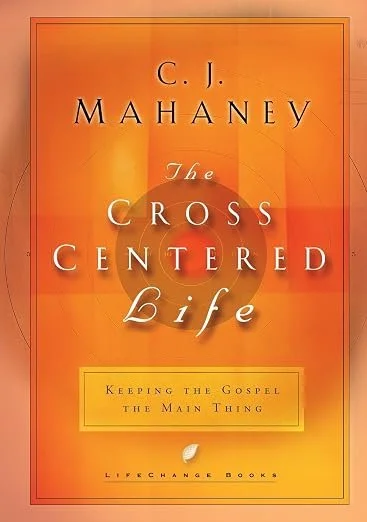
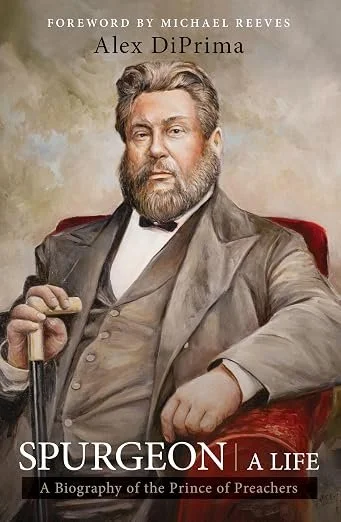
CLICK BELOW TO PURCHASE ONE OF OUR BOOKS OF THE QUARTER: