

Posts tagged Romans
SERMON SPOTLIGHT * 5/31/26

“The phrase [Under New Ownership] signals a new start for an organization. Operational shifts, product enhancements, and renovations. There’s a new boss in town, and we’re doing things their way. Out with the old, in with the new. And you’re going to love it! Today’s text teaches us that, as Christians, we are Under New Ownership. The message today is: The gospel sets us free from sin so we can freely pursue a life of righteousness and receive all its blessings.

SERIES: Romans: The Power of God in the Gospel of Christ
TEXT:
Romans 6:15-23
TITLE: Under New Ownership
PREACHER: Derek Overstreet
BIG IDEA: The gospel sets us free from sin so we can freely pursue a life of righteousness and receive all its blessings.

POINTS:
I. The Inescapable Reality of Slavery
II. A Different Kind of Slavery
III. The Joyful Freedom of Slavery

SERMON EXCERPTS:
All quotes and text emphasis are taken directly from the pastor’s notes.

“Paul opened this chapter by making clear that no one should walk away thinking that the core truth of Romans—Justification by grace alone through faith alone in Christ alone—gives a person the freedom to sin. Now, following his statement in 14 that we are not under law but under grace, Paul does the same in 15. Paul says—Are you kidding me? Of course, we don’t pursue sin to receive more grace. To the contrary: The gospel sets us free from sin so we can freely pursue a life of righteousness and receive all its blessings.”

“It’s a critically important message. We've all been guilty of treating grace as a get-out-of-jail-free card rather than the power that breaks sin's dominion and compels us to holiness. It’s a theological truth that can easily be twisted and distorted beyond recognition—I know it’s wrong, but I’m under grace. God will forgive me. It's a real temptation that threatens every believer's spiritual health.

“The gospel sets us free from sin so we can freely pursue a life of righteousness and receive all its blessings.”

“Paul makes his point using the imagery of slavery. The word slavery dominates our text, appearing eight times. Now, given our country’s history, slavery is an uncomfortable topic. But Roman slavery was different. It wasn't race-based. Many slaves volunteered themselves due to dire poverty. A slave could purchase their freedom and become a citizen. Slavery is always wrong because people are created in the image of God, but it was different in Paul’s day.”

“In 16, Paul uses the powerful imagery of slavery to explain a fundamental truth: We are all slaves. Everyone is a slave. You are either a slave to sin, which leads to death, or a slave to obedience, which leads to righteousness. To be a slave to obedience is to be a slave of God, as it says in 22. In other letters, Paul says we are slaves of Christ. But in a context where Paul argues that grace doesn’t give us the freedom to live in sin, the word obedience is meant to emphasize that life under grace is marked by specific, concrete submission to God’s will.”

“But as unappealing as it is, we need to come to grips with Paul’s broader point here: We are all enslaved either to sin or to God. You may think you're in control. You may believe you’re your own person. You may think you’re free from any compelling force—I am my own person. I don’t belong to anyone. I am completely free and unfettered in the decisions I make and the direction I take. It’s a myth. And a dangerous one at that.”

“In his new book, The Desecration of Man: How the Rejection of God Degrades Our Humanity, Carl Trueman argues that this myth of freedom is the source of society’s chaos. The greatest risk to complete autonomy is a God who claims to own us and calls us to worship Him with our lives. So we reject God and set out to desecrate all things. The more we desecrate, the deeper our enslavement to sin—It’s insanity in the name of pride!”

“In his new book, The Desecration of Man: How the Rejection of God Degrades Our Humanity, Carl Trueman argues that this myth of freedom is the source of society’s chaos. The greatest risk to complete autonomy is a God who claims to own us and calls us to worship Him with our lives. So we reject God and set out to desecrate all things. The more we desecrate, the deeper our enslavement to sin—It’s insanity in the name of pride!”

“Paul could not be clearer in 16: No one is free. You are either a slave to sin or a slave to God.”

“Here’s the question: Whose slave am I? Who am I actually serving? Not who you claim to serve, but who gets your consistent obedience. What has commanded your loyalty this week? What have you been passionately pursuing? What are you fiercely justifying? What is hopelessly irresistible to you? Who really controls you? You are a slave, but whose slave are you—Sin’s or Christ’s?”

“After telling the Romans Christians they are not neutral, he reminds them they have been freed from slavery to sin to serve a new Master—and it’s all God’s doing.”

Once, you were a slave to sin. Just as metal is drawn to a magnet, you were drawn to it. You were dead in your sin. You couldn’t help but sin. You were enslaved to it. Sin was your Master, and death was your destiny. But now you are under new ownership. The Lord is your Master. Thanks be to God. He did this. The word for committed in 17 means handed over or delivered. The Lord committed your heart to the gospel and all its moral and ethical claims in God’s Word. This is the Lord’s doing! Look down at 22.”

“God sets us free from sin. We don’t ultimately set ourselves free. By His grace, God sets us free. He transforms our hearts and gives us the Holy Spirit by whose power and work we see the beauty of Jesus and treasure him above ourselves.”

“The gospel has been stamped on your heart, marking you and committing you to Christ so that your life is now characterized, not by rote or legalistic obedience, but by willing, joyful, grace-motivated obedience that flows from the very core of who we are in Christ. This is the New Covenant promise of Ezekiel 36.”

“This is God’s doing, and it is true freedom—being transferred from the dominion of sin to the dominion of righteousness! Serving and living for God isn’t bondage; it’s the deepest and most profound freedom you will ever know. And in 19, Paul essentially says, So live like it!”

Pursue obedience with the same zeal you once pursued sinfulness. In short, you are Under New Ownership. You have a new Master—Live like it!

Here’s the truth: Sin wants to reclaim you. Sin wants you back. Don't give in. Don’t present your members—your actions, words, time, energy, and yes, your body—to sin. They all belong to God for righteousness’ sake. So don’t give them over to sin.”

“In Christ, you are Under New Ownership. You have a new Master. A better Master. A Master who is always with you, loves you, is for you, and is working all things for your good. You belong to Christ. You don’t have to answer sin’s call. Let it go to voicemail as you pursue a new life of righteousness for your Master’s glory—That’s true freedom!”

Illustration: When Your Old Demanding Boss Keeps Calling

“In Christ, that’s our relationship with sin. We know its voice. We spent years jumping when it calls. But the moment you came to Christ, you changed employers. Sin still calls. It’s a familiar and powerful voice. But ultimately, it has no power or authority over you if you don’t allow it (stay tuned for Ch 7).”

“In these final verses, Paul shows us why slavery to God is infinitely better than slavery to sin. Paul says that when sin was your master, your life was dominated and defined by it. Righteousness had no place in your life—you were free of it. When you think about what you believed, how you acted, and what you treasured and valued—you’re ashamed.“

“By the way, shame is real. It can be overwhelming. As a Christian, here’s how we deal with the shame over the past— Lord, thank you for forgiving me. Thank you for your grace that makes me a new creation!”

Enslavement to sin only and always results in shame and death, physical and spiritual. Nothing good comes from it. But your new life in Christ, with God as your Master, is stunningly different. The fruit is beautiful, not shameful, because it reflects the character of Christ, and it results, not in death, but in sanctification and eternal life.”

“Freedom to pursue righteousness that leads to greater Christ-likeness as we head for heaven to receive, not wages that we deserve, but the free gift we don’t deserve of eternal life with Jesus Christ our Lord. What a privilege and joy to be slaves of God!”

“Paul began asking—What then, are we to sin because we are not under law but under grace? Answer empahtically) By no means! Why? Because we are Under New Ownership. We serve a new Master. We are slaves of Christ called to profound obedience and recipients of the glorious benefits and blessings of heaven, in this life and the life to come. That’s true freedom.

“And the key to enjoying our spiritual freedom is obedience. Last week, we learned that the pathway to freedom is our union with Christ. This week, Paul says we experience the fullness of that freedom through obedience.”

Obedience matters in the Christian life. Grace does not make obedience irrelevant or unnecessary; it makes it possible. It makes it desirable. It makes it beautiful. And when we say no to sin and yes to righteousness, there is a fullness of joy that we experience (John 15:10-11).”

ADDITIONAL SCRIPTURE:
Ezekiel 36:26-27
John 15:10-11

APPLICATION:
“Do you lack joy in your walk with God? Are you spiritually dry? Are you increasingly disillusioned spiritually? Today is the day. How is God speaking to you in your life—Obey Him. Whatever it is. Whatever the implications. Whatever the cost. Obey Him. He is your Master. His yoke is easy, and his burden is light.”

“Right now, begin living in conformity with the One who has mercifully and graciously made you His. You are Under New Ownership—Live like it!”

The gospel has set you free from sin so you can freely pursue a life of righteousness and receive all its blessings 

QUOTES:
F.F. Bruce - “To make being under grace an excuse for sinning is a sign that one is not really under grace at all.”

Sam Storms - “We became the slaves of God and righteousness when he purchased us by the blood of his Son. When God redeemed us, he didn't put a piece of paper in our hand and declare: “This is documented proof of your freedom. You are now at liberty to go and do as you please. You are free to live however you wish.” No. He said: “I purchased you with the precious blood of my Son. You now belong to me. Enter into the true freedom of being empowered to live in accordance with my will and for my glory”

SCRIPTURE MEMORIZATION:
Romans 6:8-14

SONGS FROM THIS SUNDAY:
This Is Our God
We Are Yours Forever
Our Song From Age to Age
Is He Worthy
The Steadfast Love Of Christ

NEXT WEEK’S PASSAGE:
Romans 7:1-6

SERMON SPOTLIGHT * 5/24/26

There is only one “pathway to freedom” in Christ, and Paul outlines it for us in today’s text! Below is an outline summary of the sermon for your further study and deeper reflection.

SERIES: Romans: The Power of God in the Gospel of Christ
TEXT:
Romans 6:1-14
TITLE: Dead To Sin And Alive In Christ
PREACHER: Tom Wilkins
BIG IDEA: In our union with Jesus, we are now freed from power sin and alive in God.

POINTS:
I.  Being united with Christ, we have died to sin
II. Being united with Christ, we are now alive to God

SERMON EXCERPTS:
All quotes and text emphasis are taken directly from the pastor’s notes.

ILLUSTRATION: “Pathway to freedom”, Dunkirk in World War II

“In our text today, we find that the Christian has a greater pathway to freedom. Formerly enslaved by the power and reign of sin, our union in Christ secures our freedom from sin and ushers in our new life in God. The big idea of our text this morning is: In our union with Jesus, we are now freed from power sin and alive in God.”

“The pathway to freedom is paved by the reality that we are united with Christ. Knowing, remembering, and recounting that we are united with Christ is foundational to knowing that we have been freed from the power of sin and are now alive to God.”

“In verse 5:20b, Paul makes an amazing assertion, “...where sin increased, grace abounded all the more,” - we heard, and we sing that though “Our sins, they are many, His mercy is more!” GRACE ABOUNDED all the more! Look with me - today in verse 1, “What shall we say then,”  …if this is true (sin increases, grace abounds all the more) Q. “Are we to continue in sin?… Are we to go on sinning that grace may abound?” Has grace opened the door for us to go on and keep sinning so that we get more grace?”

““What shall we say then? Are we to continue in sin that grace may abound?” and his emphatic answer is in Vs. 2, and then he unpacks that answer in verses 3-14. We are united with Jesus, we are now freed from power sin and alive in God.”

“Are we to go on sinning that grace may abound? - Vs 2. BY NO MEANS! God forbid! No NO NO  - Paul emphatically answers the question. His answer could not be more direct. It seems crazy to Paul to even think for a moment that somehow grace opens the way to sin. Yes, though our sins are many, God’s mercy is more… but this glorious gospel truth should BY NO MEANS ever lead us to believe that the Christian is to continue on freely sinning. Sin does NOT produce Grace. Grace does NOT grant permission to sin.”

“Then PAUL answers the question in verse 1 with a question in verse 2: “How can we who died to sin still live in it?” Something radical has happened to the Christian! We have died, and we have died to sin.”

“Sin is a Master.

“‘Sin’ in this context is not simply the actions of breaking God’s law. Rather, it is the real power and rule of sin that controls and enslaves. We find it described in 5:17, 21, 6:6, 9, and 12 as power that reigns, takes dominion, it is a lord that rules those under its power and sway. It’s not simply the action. It is the power that enslaves the sinner in their sin. Sin is a Master.”

“In Paul’s answer in vs 2 - We have “died to sin.” This is GOOD NEWS. And Paul unpacks in Vs 3-7 what it means that we have died to sin. The nature of our question in vs reveals that we need to KNOW something. Paul asks us in Vs 3 “Do you not know…” In light of what we often wrongly believe, there is a truth that we need to know when it comes to matters of sin and grace.”

“Hear the progression in vs 3-4:

  • Do you not know…

  • Those who have been baptized into Christ Jesus were baptized into his death.

  • Therefore, we were buried with Jesus by baptism into death

  • We were raised with Jesus, and with Jesus, we too would walk in the newness of life.”

Paul has been teaching that righteousness comes through faith alone in Jesus. He has reminded us that we were justified by faith alone in Jesus (ch 5). He has just spoke of salvation through Christ has been accomplish by the “free gift of grace of the one man Jesus Christ.” (5:15). Our baptism, the outward, public testimony, of what has happened to us in our union with Christ is the perfect illustration for Paul to anchor our dying to sin in our union with Jesus that had been obtained by our faith in Christ. And the picture of our Baptism hangs over what comes next in vs 5-7.”

“Verse 5 is key to it all! ‘For if we have been united with him…!’ IT IS KEY TO OUR TEXT. Being united with Christ, we have died to sin. Emerging in vs 3 and 4, we find that we were ‘baptized into Christ Jesus’ (vs 3) and ‘we were buried therefore with him’ (vs 4), and then in Vs 5 ‘we have been united with him.’”

The essential meaning of this word “united” is a botanical term - the original meaning is being “grown together” - a branch now bound together - that we have been “grafted” into Christ! Paul does not want us to miss this!”

“At our conversion, in repentance and faith in Jesus Christ, we were then, now, and forever more bound together with Christ Jesus forever!  We were united with him! Vs. 3, being baptized into Jesus, we were baptized into his death. In that union, our sinful old life was plunged into death! When our Savior died, we died with him! When our Savior died, our sinful old life (in Adam) was bound therefore with him, Vs 5.”

“What wonderful news! This is our reality now! Our “miracle of deliverance” has been secured by Jesus Christ, and the pathway to our freedom from the power and reign of sin is our union with Christ! Here in these verses, Paul wants us to know why we cannot believe even for a second that grace gives us a pathway to go on sinning in order to get more grace!”

“Paul goes on to explain with Baptism as illustration, THE CROSS of Christ is now brought into view. Our ‘old self was crucified with Christ!’ When Jesus was crucified, our old self that was under the power of sin was crucified with him! The rule of sin has been definitively ‘brought to nothing.’ The rule and reign of sin has come to an end forever! AND when our old self was crucified with him, we are ‘no longer enslaved to sin!’ (6) We have ‘been set free from sin!’”

When our Master died, our old slave master died with him, and we will never again be enslaved to sin! We have been FREED FROM SIN - freed from the sin-master! We have been set free from the power of sin and the penalty of our sin! It is true that our ability to sin remains - sin that indwells and crouches near. But the GOOD NEWS is that the enslaving realm of sin no longer controls us and now we can say no to sin! The chains of dominion of sin are now gone! Vs. 14 ‘For sin will have no dominion over you…’”

“THIS IS YOUR PRESENT REALITY AND HOPE: If you are now united with Christ. You are no longer under the power and reign of sin. In Christ, you have died to sin. And the GOOD NEWS GETS EVEN BETTER.”

“Beginning with ‘Now…’ Vs 8, Having seen that we have died to sin, we now focus our attention on what Paul mentioned earlier at the end of Vs 4 - ‘walk in the newness of life.’ Now, knowing that we have died to sin, we now ‘believe that we will also live with him!’”

“Remembering the question in vs 1 ‘How can we who died to sin, still live in it?’ Instead of believing that we can still live on in sin, Vs 8 is now what we believe: We believe that we will also live with Christ. Instead of ‘living in sin,’ we will live in the newness of our life that is ours now that we have been grafted, bound together with Christ. We ‘live with him.’”

Paul shows us Christ!
-
Christ has been raised from the dead
- Christ will never die again
- Christ has dominion over death (death no longer has dominion over him - the reign of death has come to an end in Christ)
- Christ’s death brings and end to sin, once for all
- Christ lives to God”

“With Christ, we are raised from the dead. With Christ, we will never die again. With Christ, death no longer has dominion over us - the reign of death has come to an end in Christ. Vs 14 declares an amazing eternal hope for the believer - Sin will not have dominion over you! You are under a new dominion - GRACE! With Christ, our sins have been brought to an end, once for all. With Christ, we now live to God. Our union with Christ is a “vital union” - a “living union!” - it is a living reality!”

WARNING: If you are not in Christ. You remain in the reign and slavery to sin. You might think that you can simply make some choices to be a better person. Stop this, start doing that. BUT in reality, you will do only what the power of sin demands of you. You cannot break free from the power of sin, and its penalty - the wrath of God. You need a Savior! But turn to Christ for salvation and eternal freedom.”

“The very sinful thing that looked so good to us, so promising, now will not let us out from underneath its crushing power. Isn’t this true as we wrestle with destructive sins that have habitually caught us and will not let us go? But now in Christ, that power is broken, and we are called to something that is now possible to refuse to obey the sinful cravings of our body, we - 13 - do not ‘present your bodies as weapons of unrighteousness to sin’ (Schriner). And 13 - Because you have been ‘brought from death to life’, present your bodies as weapons for the purpose of righteousness’”

“We are in a fight, and the members of our bodies are weapons, weapons used for either unrighteousness (the old self that has died) or for righteousness in the reality that we have been brought from death to life - walking in the newness of life! Consider the eye, the hand, the ears, the feet, but also the tongue…James 3:5-6.”

APPLICATION:
BEFORE YOU attempt anything that follows in Vs 12-13, consider the reality that you are truly dead to the power and reign of sin and truly alive in the power and reign of God (under the dominion of grace - 14). Count these things. Reckon these things. Engage your thoughts, mind, and will! You are “dead to sin and ALIVE to God in Christ Jesus.” It is crucial that we understand that we cannot move quickly to 12-13.

You have a new Master now, and his name is Jesus. You are forgiven IN HIM. You are set free IN HIM. Sin no longer has a hold on you. You are under the reign of grace. Take heart (vs 14)... Sin will not have dominion over you! Turn and walk in the newness of life that you have now been given in Christ! Those who are presuming upon the grace of God. Do not be deceived! Verse 1 is your way of life. Sure, I’ve sinned here and there, but I am good! You think you have been given a pass to sin. You have not. 

QUOTES:
John Stott - “... in counting (considering) ourselves dead to sin and alive in God through Christ, we are to recall, to ponder, to grasp, to register these truths until they are so much a part of our way of thinking that a return to the old life is unthinkable. Regenerate Christians should no more contemplate a return to unregenerate living than adults to their childhood, married people to their singleness or discharged prisoners to their prison cell. For our union with Jesus Christ has severed us from the old life and committed us to the new… We have died, and we have risen. How can we possibly live again in what we have died to?”

Christopher Ash - “A famous World War II cartoon shows a tiny Hitler embracing (and being embraced by) a huge Russian bear. The caption has Hitler saying, ‘I have caught a bear, and he won’t let go.’”

SCRIPTURE MEMORIZATION:
Romans 5:8-14

SONGS FROM THIS SUNDAY:
All Creatures Of Our God And King
Death Arrested
Yet Not I But Through Christ In Me
Christ Is Mine Forevermore
My Life Is An Offering

NEXT WEEK’S PASSAGE:
Romans 6:15-23

THE BOOK OF THE QUARTER:

CLICK BELOW TO PURCHASE OUR BOOK OF THE QUARTER:

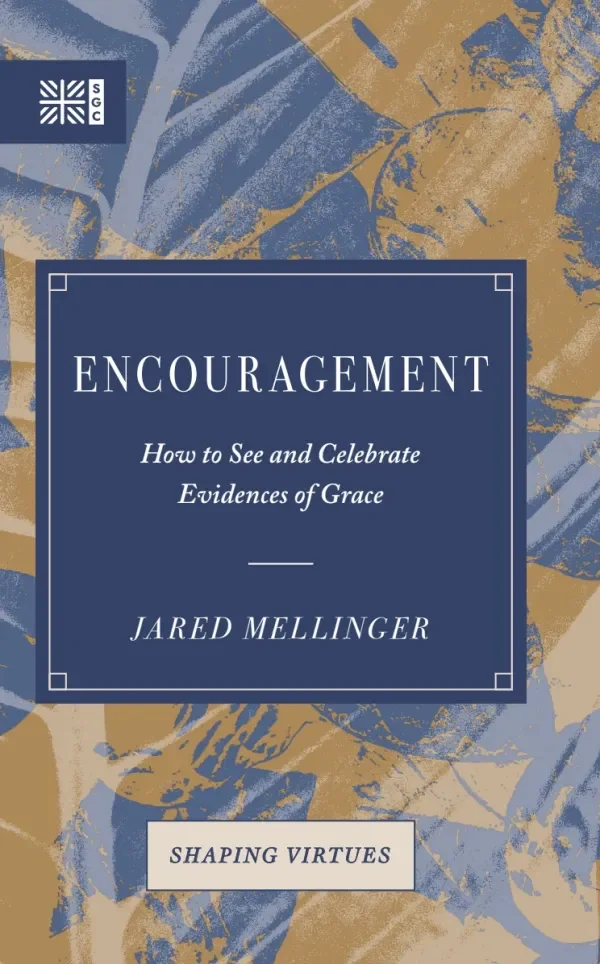
“Encouragement: How to See and Celebrate Evidences of Grace” - Jared Mellinger

SERMON SPOTLIGHT * 5/17/26

‘It can be frustrating. I’m trying my best to be a really good person—but I keep doing bad things. Sin keeps raising its nasty head in my life.’ Good news! Our text explains the problem and offers a solution. Below is an outline summary of the sermon for your further study and deeper reflection.

SERIES: Romans: The Power of God in the Gospel of Christ
TEXT:
Romans 5:12-21
TITLE: God’s Mercy Is More
PREACHER: Derek Overstreet
BIG IDEA: Our sins are many, but God’s mercy is more.

POINTS:
I. The Bad News: We Were Born This Way
II. The Good News: Jesus Is Our Better Adam

SERMON EXCERPTS:
All quotes and text emphasis are taken directly from the pastor’s notes.

ILLUSTRATION: “You’re a natural!”

Has anyone ever told you that you are a natural at something? If your answer is no, today is your day. Ready?—You are a natural born sinner! All of us are born with an innate ability to sin. There’s your talent! Here’s the truth: Most of us go through life believing we’re fundamentally good. Who walks around saying, I’m a bad person? Most of us believe that we’re good people who want to do good things, but occasionally mess up. We’ll admit we’ve made mistakes, but nobody’s perfect.”

“It can be frustrating. I’m trying my best to be a really good person—but I keep doing bad things. Sin keeps raising its nasty head in my life. Good news! Our text explains the problem and offers a solution. And it’s all based on this premise: You’re not good. You aren’t a good person who occasionally does sinful things. By nature, you are a sinful person who occasionally does good things. We don’t like to hear that. That might even offend you. But it’s the biblical truth. Here’s what we learn today: Our sins are many, but God’s mercy is more.”

“In Adam, we are all guilty of sin, but in Christ, by faith, we are forever forgiven and free from the power and penalty of sin. Our sins are many, but God’s mercy is more.”

“In just 25 words, Paul explains the ruinous effects of the first sin ever committed. The backstory is Genesis 2-3. God created humanity as fundamentally good. He provided Adam and Eve with everything they needed to flourish physically, emotionally, and spiritually. The only thing He prohibited them from was eating the fruit of the tree of the knowledge of good and evil. But Adam chose to disobey God by eating the forbidden fruit. At that moment, sin and its wages, death, entered the world, and the nature of man was radically changed.”

“This is Paul’s point in 12. Since sin and death entered the world through one man (Adam), death (physical and spiritual) also spread to all people because all sinned. When Adam, who represented mankind in the Garden, sinned, we all sinned. I wasn’t there in the Garden, yet I inherit his guilt and fallen nature.”

“This reality that all men sinned means that God thought of us all as having sinned when Adam disobeyed is what Paul explains in 13-14.”

“Paul says that from Adam to Moses, people didn’t have God’s written laws. Those were given to Moses at Mt. Sinai. Paul isn’t saying sin didn’t exist from Adam to Moses; it just wasn’t like Adam’s sin, which was an infraction of God’s clear command or His written Law given through Moses. Yet (14) death, the wages or effect of sin, reigned.”

“Genesis 5 lists the descendants from Adam to Noah, a time before the law. The constant drumbeat is—He died! The point is that Adam’s sin wasn’t limited to him; it had a radical effect on every human being who came after him. Paul reinforces this a few verses later—read 18-19.”

“When Paul says many were made sinners in 19, he uses the aorist tense, which denotes a completed action in the past. How were many made sinners? Answer) (19) By one man’s disobedience. (18) As one man’s trespass led to condemnation for all.”

“Theologically, this is what we call original sin, a term that doesn’t refer to Adam’s first sin but to its effects. In Adam, we have all sinned; we stand condemned, and our nature is corrupted. Simply put, we aren’t sinners because we sin; we sin because we are by nature sinners.”

“We aren’t as bad as we could be, but every part of our being is affected and polluted by sin. This is the idea of original sin, and it’s what Paul means in Ephesians 2:3 when he writes—We were by nature children of wrath, like the rest of mankind.”

If you’re not a Christian, here’s the takeaway: Fundamentally, you are not a good person. I know that’s hard to hear, but it’s true. If you are to have any hope, it begins with acknowledging that, at the most basic level, you are not good. You try to do good. You occasionally do good. But even your goodness is polluted by sin. By nature, you are a sinner, which is why you sin.”

“This is why Jesus came: to save you from your sin. You need a Savior. Our problem isn’t our parents and how they raised us, or our boss and how he sets us off. Your problem isn’t that you need more counseling or education. We all need a Savior. That’s why Jesus came – not to help you but to change you. Jesus came so you could become a new you. That begins with repentance and faith.”

“Adam’s single act of disobedience in the Garden was consequential, plunging mankind into ruin and making sin and death universal. But thanks be to God for the end of 14—Adam, who was a type of the one to come.

“Paul introduces another man. A second Adam. And what a difference between the two. Adam went his own way, rejecting God's will. Jesus submitted himself to God, selflessly emptying himself in the incarnation, becoming a servant and humbling himself to the point of death. What Adam ruined, Jesus came to rescue. What Adam plunged into sin and death, Jesus would raise to righteousness and life. This is what Paul celebrates in 15-19 as he highlights a series of contrasts between Adam and Jesus—read 15.”

“Twice, Paul uses the phrase free gift to describe what Jesus has done (three more times). The free gift is the atoning sacrifice of Jesus, which brings forgiveness and eternal life.”

Here’s the contrast: Unlike Adam’s disobedience, which brought death’s decay upon all mankind, the abounding grace of God in Jesus reversed the curse of death for all who believe in Jesus.”

“Christ’s grace is greater than Adam’s sin!”

“Now n 16, Paul contrasts the results of the two men’s actions—read 16. Where Adam’s sin brings condemnation before God for all, the free gift of Christ’s sacrifice results in justification before God. Condemnation means separation from God, while justification means acceptance by God. This is the abounding grace of God in the gospel, that He reconciles guilty and condemned sinners, by their nature and actions, to Himself.”

“And there is something critically important in Paul’s language here. Midway through 16, he says—For the judgment following one trespass brought condemnation. Condemnation for all came after one sinful act. That’s all it took to plunge mankind into condemnation; just one sin set off a cascade of sins.”

“In a culture, even a Christian one, that loves to make light of sin by using language that softens its impact, lends it a degree of respectability, or simply ignores it, we are reminded of sin’s seriousness. It deceives us and damages our relationships with God. We know how it affects everything – our relationships, our work, our marriages.”

“At our first Eastside service last Sunday, we talked about being a gospel-centered church above all things. To be gospel-centered is to be serious about sin because it’s a holy God who has redeemed us to reveal his wisdom and glory.”

“Back to 16, in contrast to Adam’s sin, which brings condemnation, look at what Paul says at the end of 16—but the free gift following many trespasses brought justification. Christ’s work is very different from Adam’s. Even though we are guilty of many trespasses, what Jesus did on the cross was sufficient to provide forgiveness not only for Adam’s sin that brought sin into the world but also for many sinners like us and for our many sins. Grace covers ALL your sin.”

“The contrast gets even starker in 17. God intended Adam to rule the world for His glory. Instead, because of Adam’s sin, death ruled over Adam and the rest of mankind. In Adam, we enter the world spiritually dead (Ephesians 2:1) and are destined for physical death and eternal judgment (Hebrews 9:27).”

“But in Christ, there is a Great Exchange. Sin for righteousness. Condemnation for justification. Death for life. In Christ, we can walk in newness of life, fully accepted and loved by God, and victorious in life and death. How? Because as great as our sin is, the grace of God in the gospel of Jesus Christ is even greater. This is Paul’s point in 20-21.”

Is our sin great—Yes. But grace is greater! We will spend the next two weeks unpacking the implications and applications of our text today, covering 6:1-14 and then 6:15-23. If you are visiting or new to SGC, this section of Romans is critically important to us as a church. We believe the Bible calls us to live out our new life in Christ together, helping one another put sin to death, grow in righteousness, and live in the goodness of the gospel as the victorious children of God we are.”

“That begins with this understanding: This thing called sin is no longer the core of who I am. I don’t have to give in. Because in Christ I am no longer a slave to it, sin has no power over me. Here’s the promise: Your sins are many, but God’s mercy in Christ is more!”

ADDITIONAL SCRIPTURE:
2 Corinthians 5:19
Hebrews 13:3

APPLICATION:
Today, the takeaway is this: When you are in Jesus Christ, your nature undergoes a fundamental change. Jesus didn’t just come to rescue you from the power and penalty of sin; he has changed your will. 

When you become a Christian, whatever it is—greed, anger, dishonesty, lust, or whatever you fill in the blank—it can still tempt you. You can still choose to sin. But in Christ and by the power of the Spirit working in you, God gives you freedom from its power. You don’t have to give in. Your nature has been changed. You are no longer a slave to sin. You’ve been set free from its power over you. You live in victory over sin.

QUOTES:
John Calvin - “Christ is much more powerful to save, than Adam was to destroy.”

SCRIPTURE MEMORIZATION:
Romans 5:6-11

SONGS FROM THIS SUNDAY:
His Mercy Is More
It Was Finished Upon That Cross
The Power Of The Cross
All Sufficient Merit
Come Behold The Wondrous Mystery

NEXT WEEK’S PASSAGE:
Romans 6:1-14

THE BOOK OF THE QUARTER:

CLICK BELOW TO PURCHASE OUR BOOK OF THE QUARTER:

“Encouragement: How to See and Celebrate Evidences of Grace” - Jared Mellinger

SERMON SPOTLIGHT * 5/10/26

The God who knows your every failure, weakness, and sin, even the secret ones, loves you beyond comprehension. That is a life-changing truth that should give us assurance and produce boundless joy in our hearts. Below is an outline summary of the sermon for your further study and deeper reflection.

SERIES: Romans: The Power of God in the Gospel of Christ
TEXT:
Romans 5:6-11
TITLE: Our Joy in God’s Love
PREACHER: Derek Overstreet
BIG IDEA: The God who knows you completely loves you lavishly.

POINTS:
I. The Wonder of God’s Love
II. The Assurance of God’s Love

SERMON EXCERPTS:
All quotes and text emphasis are taken directly from the pastor’s notes.

“One of humanity's deepest longings is to be loved. Everyone wants to be loved; everyone needs to be loved. There’s nothing like the feeling of being loved.”

“If we’re honest, the struggle to believe anyone would truly love us, especially if they knew what we were really like, is real. So we work hard to put on a show, always trying to project the most lovable version of ourselves. Here’s the problem: We may fool some people, but we can’t fool God. Take heart. The good news in our text today is this: The God who knows you completely loves you lavishly.”

“Today’s text begins with the word For. This links it to the previous 5 verses and, in particular, to one of the most remarkable truths in the Bible—(5b) God’s love has been poured into our hearts through the Holy Spirit who has been given to us.”

“What follows in 6-8 are two objective truths that help us capture the wonder of the Lord’s love that has been and is being poured into our hearts.”

Objective Truth #1 We do not deserve God’s love.

“6—while we were still weak: We were utterly powerless to save ourselves. Morally, we could contribute nothing to our own salvation. We were completely unable to advance our cause before God. 6—we were ungodly: Created as His image-bearers to live and reflect His glory, our intellect, reason, and capacity for communion with God had been so marred by sin that we became entirely unlike God. 8—while we were still sinners: We were offenders and trespassers against God’s holy character. When it came to His righteousness, we completely missed the mark. We were wicked, we were rebellious, and we hated God, exchanging His glory for our own. 10—while we were enemies: In our sin, our hearts hardened against God with deep hostility. In all this, we stood guilty, without excuse, and fully deserving of his wrath.”

“All of these descriptions are impossible for the world to accept. Tell someone they are ungodly or that they have enmity toward God—then duck. But this is what the Bible teaches about every human being: our sin has made us wholly undeserving and completely unlovable. God knows all your failures, weaknesses, and hidden sins. Yet from before the world’s foundations, He set His divine affections on you and shed His Son’s blood to overcome your unlovability.”

ILLUSTRATION: Pastor Peter Miller

“What a precious story. If we look hard enough, we can find amazing stories of human love, like Pastor Peter’s. Even the best of them pale in comparison to God’s love. Christ didn’t just show up and appeal for your pardon—he bled and died for your pardon. Wonder at that!”

Objective Truth #2 God’s love came to us at great cost.

“Our justification is free, but it is not cheap. The cost of God’s love was the death of His only Son. Not only does this reveal the severity of sin, in that God had to send His Son to us and sacrifice him for us, but it also shows the depths of God’s love. As 1 John 4 says—This is ultimate love. No love compares to God’s love in the gospel. Paul illustrates this in 7.”

“Paul says—Sure, someone might die for a good person. They are far and few between, but I can see it. But that’s not what we are talking about here. Weak. Sinner. Ungodly. Enemy. That’s who God sent His Son to die for. The point is, God’s love is in a class by itself. It is a holy love, flawless, with no sin, no selfishness, and no deception. God’s love is transcendent. It is beyond any human experience. The Lord’s love, demonstrated in the death of Christ and poured out into our hearts by the Spirit, is in a category of its own. And in the gospel, He pours this holy and transcendent love into our hearts through His Spirit.”

RUNNING APPLICATION: If you’re not a Christian, you can know this love. If you’re a believer, do you find yourself doubting God’s love for you?”

“Maybe you feel no one has ever truly loved you. Some have tried, but their feelings faded. Perhaps you carry the hurt of failed love from a parent, a spouse, or a child.”

“God knows you completely, sin and all, Romans 1-3 and all. Yet, He loves you lavishly. He loves you unfailingly. He loves you unchangingly. And the highest expression of His love for you is the selfless gift of Himself to you in Jesus Christ. Don’t make the mistake of judging God’s love for you by how your life is going today. Look back 2000 years to the cross and wonder at His divine affections for you!”

“Verses 9 and 10 are parallel statements with one tweak. In verse 9, Paul says we have been justified by the blood of Jesus. Justified is a legal term that evokes a courtroom scene. It means you stand righteous before the Judge. In 10, Paul says we were reconciled to God by the death of Jesus. The term reconciled, which replaces the term justified, is an interpersonal term. It’s about relationships and friendship. The picture is not a courtroom but a family room. The two terms present two distinct and powerful images of what Christ has done for us.”

Justified: Once guilty sinners, we now stand as righteous and pardoned in God’s eyes. That’s what justification means. Reconciled: Once enemies of God, we are brought into an intimate relationship with him, He our Abba Father and we His beloved children, all because of the life, death, and resurrection of Jesus. That’s reconciled.”

“But in both 9 and 10, Paul’s logic is clear: Because God has saved you, He will save you. We have been saved by Jesus’ sacrifice; therefore, we will be saved from God’s wrath on the final day. The two go together. They can’t be separated. God does not save us and lavishly pour His love into our hearts in this life only to abandon us on Judgment Day. God’s love gives us hope in life and death. This is the assurance of divine affections.”

“God loved you as His enemy. Will He destroy you as His beloved child—No! When you were a hardened sinner, God reconciled you to Himself through the death of Jesus. Will He not preserve His children by his life-giving resurrection—Yes! If God has already removed the greatest obstacle to peace with Him, namely our sin, enmity, and guilt (6-8), will He not ensure you are spared His wrath on the final day (9-10)—Of course He will!”

“This is the hope and assurance that God’s redemptive love poured into our hearts the moment we were justified by faith provides. Our salvation doesn’t rest on our ability to please God or preserve our salvation through our performance.”

“Your salvation rests in the unchanging, unfailing love of an unchanging God. As Paul goes on to say in Romans 8:31-39 (a parallel passage to ours)—If God is for us, who can be against us? No one can condemn you, and nothing can separate you from the love of God in Christ Jesus. Because God has saved you, He will save you. Those He has justified (an action in the past), He has glorified (an action at the coming of Jesus, but so sure it’s stated in the past tense). This is the wonder and assurance of the love of God that has been poured into our hearts in Christ!”

"What should our response be to this great love we have received in our justification? It should produce overwhelming joy in our hearts.”

“This is the third time in 1-11 that Paul uses the word rejoice to describe the Christian life. In 2, we rejoice in our hope. In 3, we rejoice in our sufferings because of our hope. But here in 11, we rejoice not in the benefits of our justification but in the person of our justification—We rejoice in God through our Lord Jesus Christ.”

“Everything required for your eternal salvation has been accomplished in Christ. The pressure’s off. The price has been paid. The verdict is in. You are secure in God’s grace and love forever. You are reconciled to Him and have peace with Him. God loves you—Rejoice!”

APPLICATION:
What fears and doubts are overshadowing God’s gracious and eternal love for you? Romans 5:6-11 should dismantle them all. 

  • Are you discontent?—God’s love is the greatest treasure you could ever possess. 

  • Are you lonely?—God’s love always satisfies the heart that clings to it. 

  • Are you afraid?—God’s love is unwavering, unfailing, and unchanging. The greatest thing to fear is God’s eternal wrath, which is no longer your reality in Christ!

  • Are you reluctant to love others?—Love is at the heart of the Christian life. God’s love gives you the security and freedom to live out 1 John 4. Because you have been loved, you love others. 

Your life can be an exuberant, joyful celebration and service to your Savior because God's love for you is incomparable, Christ's work for you is sufficient, and your salvation is secure. Rejoice in God through our Lord Jesus Christ.

QUOTES:
Charles Spurgeon - “The Lord loves you. He has a complacency and a delight in you. You give him pleasure; he watches for your good; you are one of his household; your name is written on his heart. He loves you….He that made the heavens and the earth loves me! He whose angels fly as lightning to obey his behests, the tramp of whose marching shakes both heaven and earth, whose smile is heaven, and whose frown is hell, loves me! Infinite, almighty, omniscient, eternal, a mind inconceivable, a spirit that is not to be comprehended; but he, even he has set his love upon me.”

John Sott - “We should be the most positive people in the world. We cannot mooch round the place with a dropping, hang-dog expression…No, “we exult in God.” Then every part of life becomes suffused with glory. Christian worship becomes a joyful celebration of God and Christian living a joyful service of God. So come, let us exult in God together!”

SCRIPTURE MEMORIZATION:
Romans 5:6-11

SONGS FROM THIS SUNDAY:
Sing
God Is For Us
Rise My Soul The Lord Is Risen
The Glories Of Calvary
Rejoice

NEXT WEEK’S PASSAGE:
Romans 5:12-21

THE BOOK OF THE QUARTER:

CLICK BELOW TO PURCHASE OUR BOOK OF THE QUARTER:

“Encouragement: How to See and Celebrate Evidences of Grace” - Jared Mellinger

SERMON SPOTLIGHT * 4/26/26

Justification through faith alone truly is, as Sproul would say - a Christmas gift worth rejoicing in “over and over again!” Today, we are tearing the ribbons and wrapping paper off! Below is an outline summary of the sermon for your further study and deeper reflection.

SERIES: Romans: The Power of God in the Gospel of Christ
TEXT:
Romans 5:3-5
TITLE: Our Hope In God
PREACHER: Tom Wilkins
BIG IDEA: Because God has given us an anchored hope in our suffering, we rejoice in our suffering.

POINTS:
I. God has given us a hope that is produced in our sufferings
II. God has given us a hope that will not disappoint us

SERMON EXCERPTS:
All quotes and text emphasis are taken directly from the pastor’s notes.

“We have hope because we have Peace with God.”

“Look how Paul transitions from point v2 to v3 with these words “Not only that…” These words point us back to our justification (vs 1). They point us back to the shocking reality that we “have peace with God” (vs 1). Through faith in Jesus, we are justified, and we have  “obtained access to the grace of God in which we stand.”  The words “Not only that,” point back in the text… back to the future in verse 2… “rejoice in our hope of the glory of God!” This is shocking! If Paul stopped here, wouldn’t this already be enough?... What else does God need to do? Isn’t our justification wondrous!”

BUT Paul’s rejoicing is not finished as he rejoices again in what God has done in justifying us! Paul HAS MORE! Without flinching, he declares justification is the ground from which we can rejoice even in the face of our present tribulation, afflictions, sorrows, and griefs.”

First, (following Not only that…) we “rejoice,” we “glory,” “we boast,” we “exult.” The word “exult” captures Paul’s meaning best in this context, and he uses this word here in Verses 2 and 3, and again in 11.”

“The exultation in God is described as a profound, triumphant joy and boasting arising from recognizing His salvation… often expressed through singing, praising, and glorifying. It’s intense emotion and physical, dancing, leaping, and spinning with joy.”

Paul, doesn’t hold back when it comes to our justification through faith in Jesus Christ, the ground on which we spin in joy! Look around, Christian! The floor upon which you exult in God is paved in your justification - REJOICE!”

“This wrecks the preacher’s desire as a pattern to start off in a crescendo, building from quieter melodic sounds in the sermon and building toward the crashing of cymbals and thunderous finale! GOD LEADS IN THE TEXT WITH THE DEAFENING SOUNDS OF JUBILANT TRIUMPH - YOU HAVE BEEN JUSTIFIED IN MY SON! EXULT IN THE GLORY THAT AWAITS!”

“First, Rejoice!, but then… Second, we exult in… and there’s a surprise in the text - we rejoice IN OUR SUFFERINGS.”

“…here we have the astonishing statement: “We rejoice in our sufferings” - Rejoice in the horrific sufferings that we long to be set free from in this life? Vs 3 - This is not some strange attraction to pain and suffering. It is not rejoicing in the troubles themselves, but rather rejoicing while we find ourselves in the midst of trouble. The “suffering” here is tribulations, trials, griefs, and afflictions that are the crucible of the Christian’s life. IT is also impossible to do this in our own strength!”

“So, we see that we rejoice IN our suffering.

Third, we rejoice “knowing.” 

This “knowing,” this “knowledge” is the reason we boast in suffering. We are now given that reason. We are being reminded (and now we “know”) how and why we are able to boast in suffering.”

Suffering produces Endurance (vs 3) - In our sufferings, God quite literally toughens us up. God is at work in the fiery heat and duration of our trials. In fact, they only serve, in his providence, to make us stronger, to last longer, growing a patient perseverance. The joy we have in verse 3, is that God is at work in suffering, producing endurance.”

Endurance produces Character - “tested Character” (vs 4) - 

God strengthens our endurance, and in so doing, the trial proves out our moral character. He is bolstering our character by degrees, making us holy. Justification made us right with God, “Not only that,” he effectually weaves the moral fabric of our character. NOTE: His testing of our character doesn’t simply reveal our sinfulness (and our sin at times is certainly revealed). In the midst of suffering, he is not standing on the other side waiting to see how we come through it. No, he is “working all these things,” all of our afflictions, for the good of our character.”

Tested Character produces HOPE (vs 4) - Our hope only grows stronger as tested character. He is building our endurance. He is building our character, and now we discover THE goal of suffering! The fact that our character is strengthened is a testimony that God is at work in us. This testimony of God changing us produces hope.  This is where all of this has been leading us - HOPE!”

“Paul has not listed out the various kinds of pain and suffering. Nor does he minimize our sufferings. This is a perfect place where Paul could list out his sufferings, but he doesn’t. His goal is to preach to sufferers this amazing truth. His goal is to prepare future sufferers with this amazing truth. God, who knows all of it, who sees all of it, and that truth is he is with you in all of it, and is at work in all of it, is giving you GOSPEL-GROUNDED, JUSTIFICATION-SECURED hope.”

“DON’T FORGET verse 3 - We now know something! What we now “know” is that God’s providential design is the driving force behind the mounting elements of our affliction. God is taking us somewhere through suffering. We come to KNOW something.”

“As we marvel that God is at work in our afflictions, no matter what they are, God is at work producing a deep-seated hope in your soul. In our suffering, God produces an unwavering, anchored hope. Not Only That… see what Paul takes us to next in verse 5.”

“Let’s look at verse 5 again: Here in the English Standard Version, “and hope does not put us to shame.” Other translations will say that hope “will not disappoint.” This hope that God is producing in us will not embarrass us. Let’s remember the CONTEXT: The gift of Justification brings with it an anchored hope in the midst of suffering.”

RUNNING APPLICATION: How can I be sure that my hope will not be in vain, that it will not disappoint? In our suffering, our hearts give way. They doubt. They faint. The forget. Our soul shrinks back. Our hearts question God’s love for us. How can we be sure that our hope will not have been foolish? The answer: Paul, in Romans Chapter 5, is teaching us that our hope is not rooted. It is not anchored in us. It is found in our merciful God and in what he has already done for us in justification. It is anchored in “we have been justified by faith” in Jesus. Our hope cannot put us to shame or disappoint us because it is anchored in the Rock of Jesus Christ, through whom we now have peace with God and access to his grace.”

“This assurance is not simply an implication of the text; it is an assurance anchored in the very next words: “...because God’s love has been poured into our hearts through the Holy Spirit who has been given to us.””

The Holy Spirit has “poured” God’s love into our hearts at our justification and CONTINUES to pour his love into our hearts forever. The Holy Spirit continually and profusely pours God’s love into our hearts. This is what he does, not what we struggle to do. How can I get that into my soul? I can’t, BUT HE DOES! WHAT A GIFT THE HOLY SPIRIT IS TO US, and what a gift He is in our suffering.”

THE foundational reason that we can be assured that our hope in our present and future sufferings will not put us shame, is we know already come to pass - THE CROSS OF CHRIST - the atoning sacrifice of our suffering Lord and Savior on his cross is the basis of all of our joy, worship, boasting, exulting… we glory in Jesus Christ, and him crucified recalling the old hymn:
“On a hill far away stood an old rugged cross,
the emblem of suffering and shame;
and I love that old cross where the dearest and best
for a world of lost sinners was slain.””

“Our hope will not put us to shame, because Jesus bore our shame! Our future sufferings will not come with shame, but will come with faith in what Jesus did, and our Hope will be in what He said he would do.”

The enemy “prowls around seeking whom he may devour,” particularly in our sorrow and suffering… BUT HE CANNOT HAVE US! Our Savior has crushed his head and at the same time has justified us!”

“Our HOPE in Christ, in suffering, will not put us to shame, because he bore our shame and suffered for us, and through faith in him, we are secured forever in God’s love. The Holy Spirit is pouring the love of God into our hearts!”

“To the Unbeliever: Turn away from your sin and cry out to Jesus for salvation. You are completely exposed before God in the shame of your sins; your worst nightmares cannot compare to the day of judgment when you stand before Christ, the Judge of heaven and earth. All may be well with now, but an eternity of affliction, suffering, sorrow, grief, and pain awaits you! BUT you have an everlasting hope waiting for you if you turn to Christ in repentance!”

ADDITIONAL SCRIPTURE:
John 16:33

APPLICATION:
1. Your justification is your reality! You belong to God, through Jesus, and the Holy Spirit is pouring God’s love into your heart! Last Sunday, we learned that the doctrine of justification through faith is truly “a gift that keeps on giving.” Today, we heard R.C. Sproul say “For Paul, Christmas never ends!” - one gift inside another gift that leads us to rejoice… to glory… in God.

Q. When was the last time you pulled on the bow and opened that gift of the gospel? Again and again, turn to Romans and recall (memorize) the mounting joys that your justification secures for you forever. Open the gift of your justification and preach THIS gospel to yourself daily.

2. Another reality is that we do suffer, and for some, the affliction is almost unbearable.  So, we must be prepared for suffering! 

Q. What can you do now to prepare for future suffering? Maybe your life is going well. But suffering is coming. 

First: Do not be surprised. 1 Peter 4:12
Second: Do not lose heart. Take heart! 2 Corinthians 4:16–17, John 16:33

3. One more reality is that everyone around is suffering.

Q. How do you prepare others for suffering?
Q. How do you help others who are suffering?
Q. How can I witness to others who are suffering?

Church: Minister to and pray for those in the midst of suffering. Oh, how they need to be lifted up with an encouraging word from God’s word. They need to be reminded of verse 3 “Not Only That…” Come alongside them and endure with them. When the time is right…Gently remind them that the Holy Spirit is persevering them. Gently remind them to turn to the Lord for his grace and mercy. Witness to your suffering neighbor.Do not promise them that their suffering will go away if they believe in Jesus. But, do promise them that they will have an eternal anchored hope in Jesus if they will believe in him. Promise them that God will forgive them and love them forever, no matter what may come!

QUOTES:
R.C. Sproul - “Salvation is not like receiving just one gift under the Christmas tree but gift after gift all wrapped up together. The first package we find is our justification, and when we open that package, we find inside it another - peace with God. Inside that package is access into His presence, and inside that is the ability to rejoice in glorifying the glory of God. Inside that package, we find there is joy in the midst of tribulation, and that very tribulation gives us another gift - perseverance. Tear off the ribbon from that gift, and there is another one, which is the character that perseverance gives us, and within that gift is hope that will never embarrass or disappoint us. Finally, we open one more present, and it is the love of God poured profusely into our hearts by the grace of God. All these are the gift of our justification. Do we wonder, then, at that doxological writing of the apostle Paul, who rejoices in these things over and over again? For Paul, Christmas never ends!”

Thomas Schriner - “This is an astonishing statement, since future glorification is prized precisely because afflictions are left behind.”

SCRIPTURE MEMORIZATION:
Romans 5:1-2

SONGS FROM THIS SUNDAY:
My Soul Will Wait (Psalm 62)
Christ Our Glory
Help Us See Christ
From Everlasting (Psalm 90)
It Is Well With My Soul

NEXT WEEK’S PASSAGE:
Ephesians 3:7-13, Nothing Compares to the Church

THE BOOK OF THE QUARTER:

CLICK BELOW TO PURCHASE OUR BOOK OF THE QUARTER:

“Encouragement: How to See and Celebrate Evidences of Grace” - Jared Mellinger

SERMON SPOTLIGHT * 4/19/26

Peace with God is truly the “gift that keeps on giving!” Below is an outline summary of the sermon for your further study and deeper reflection.

SERIES: Romans: The Power of God in the Gospel of Christ
TEXT:
Romans 5:1-2
TITLE: Gospel Powered Peace
PREACHER: Tim Lambros
BIG IDEA: Justification eternally transforms unbelievers and empowers  believers daily.

POINTS:
I. A Point in Time Gift
II. A Present Day Gift

SERMON EXCERPTS:
All quotes and text emphasis are taken directly from the pastor’s notes.

ILLUSTRATION: The origin of the phrase “The gift that keeps on giving”

“‘THEREFORE’…put your phones down, turn your TV off…now that in Romans 1-3 you’ve heard of your NEED for justification…now that in Romans 3-4 I’ve argued THE WAY of justification…THEREFORE, SINCE WE HAVE BEEN JUSTIFIED BY FAITH.” [Paul is trying to capture our attention using the word therefore.]

“You’ll notice also that Paul changes his prepositional usage. It’s now WE! vs. Romans 1: ‘I am not ashamed of the gospel’, Romans 1: ‘So they are without excuse’, Romans 2: ‘So you suppose, O man’ and ‘Now you, if you call yourself a Jew’, Romans 3: ‘Their throat, their mouth, their feet’”

“[This] is to [show us] how God’s past action puts the accent on God’s activity not  ours.”

“Notice also that Paul is speaking in the past tense. We have been JUSTIFIED – past  tense – we are not BEING JUSTIFIED. Scripture says believers HAVE BEEN  JUSTIFIED. There is a point in time event in each believer’s life that God justifies us.  Declares us righteous in His sight.”

“Let’s be clear. God’s justifying action in our lives is an absolute gift of grace. WE HAVE  BEEN JUSTIFIED. In other words, it was a point in time event that happened to you.  Theologians call it a monergistic work of grace. Scripture is clear that this is a work that God does to undeserving sinners.”

“So when Paul writes “we have been justified by faith” let’s make sure we put the accent  where Scripture puts the accent. GOD JUSTIFIES.”

“We have been acquitted of our sins. Justification radically  transforms us and permanently transforms our eternal status. Formerly, like Romans 3:23  stated we were in the group that ‘sin and fall short of the glory of God’ but now we have eternally been radically transformed.”

“We have received a gift of grace that keeps on giving. One of the most powerful  implications of being justified by grace is Paul’s first implication of this eternal and  powerful transformation. We have peace with God.”

“Peace with God must be understood Biblically. The secular understanding of peace is the  absence of hostility. When the Bible speaks about peace, it deals with your deepest, most inner, unrest in your soul, a well being not known since the garden – in other words a peace that only comes with salvation and reconciliation with God Himself.”

“We have peace with God through our Lord Jesus Christ – Peace with God comes to us  only one way. It only comes through Jesus Christ. Justification doesn’t stop at God’s  acquittal of our sin. IT KEEPS ON GIVING.”

“We have peace with God because our sins are acquitted but there’s more. The greatest  exchange – Jesus righteousness imputed to us only comes through the atoning work of  Jesus. Paul likes to say this comes to those who are IN CHRIST.”

“The OT understanding of peace - SHALOM - is not simply the absence of war or even an inner sense of well-being or feeling of peace. Shalom – is a deep sense of peace that arises out of an outward status of having peace with God.”

“Isaiah 9 prophesied that this Shalom would come through a person THE PRINCE OF  PEACE. God’s justifying work of grace comes through Jesus Christ our Lord.”  

“You’ll notice when we get to the end of this section of chapter 5:10-12, Paul uses the word reconciliation – now that we are reconciled and v. 11 we have now received reconciliation. Peace with God is reconciliation with God, but it only happens – can only happen, in and through our Lord Jesus Christ.”

RUNNING APPLICATION: Has God justified you? Do you have peace with God? Are you reconciled with God? What is the implication of justification by faith alone and the peace with God we now enjoy? How does it  affect our present lives? 

ILLUSTRATION: phrase “in the now but not yet”

Through him we have also obtained access by faith into this grace in  which we stand, - We have access – DAILY, MOMENT BY MOMENT ACCESS. The NT calls us to boldly enter – this gift that keeps on giving means we don’t have sporadic access to God nor is it a precarious relationship with the King of Kings. It’s a gift that gives us continual and secure access to God.”

ILLUSTRATION: imagine the common OT saint having access to God’s presence once a year getting teleported to the NT understanding of access – the gift that keeps on giving.

“Church, through Jesus Christ’s justifying work in our lives we have peace with God in a  reconciled relationship. But there’s more to this amazing gift. We also have access by  faith – ALL THE TIME.”

“This gift that keeps on giving is meant to be used daily and moment by moment while  we live in the now but not yet. Not only is this a gift but we need this! When your inner voice tells you lies about your status before God. When you have sinned and fall short. In that fight to put to death or weaken a life besetting sin. When your adult kids aren’t pursuing the Lord – in fact they have no interest. When you need patience with the inevitable health struggles as your body falls apart.”

ILLUSTRATION: Having access by faith into this grace which we stand is like God providing a  water fountain in the back of the Church. You are told you have access any time for a  drink, for your water jug or to fill your 5 gallon buckets and take it home. It’s pure Swiss  water and it’s chilled all the time. Access is granted only to members of our Church.  What would it be like if members continually walked by and said “I’ve got my water  bottle I’m fine” … we would honor this gift by accessing it as often as needed!

“Justifying grace is the grace we stand in when we are tempted, when we face suffering or  anything [difficult] in this fallen world.”

“Church, justification by faith alone is a point in time event for sure. But it’s so much more. What we receive is peace with God but so much more. This access into this grace Paul is talking about is an ongoing state or realm we operate in until He returns.” 

“We have been transferred from the realm under the law to a realm of grace.”

“You’ll notice there’s an additional gift that is spoken about at the end of v. 2. We have  been justified and enjoy peace with God. We are transferred to this realm of grace  where we can approach the king without fear of losing favor. Notice what comes next.  Paul says ‘we rejoice in the hope of the glory of God.’”

“We are a people who are a rejoicing people. There is much to rejoice in and Paul’s going  to develop this over the next sections of Romans 5:1-11. But here is the core truth about our justification – our hope is in the glory of God and that hope is rooted in God’s glory being displayed in the justification of sinners. We rejoice in the truth and reality that on that [final] day there will be no condemnation – God’s justifying grace will be on display and His glory will be honored. We get the benefit TODAY – there is NOW no condemnation - so we rejoice in the hope of God’s glory being on display in the future.”

ILLUSTRATION: Adoption - There was a legal declaration decided upon outside of you that powerfully changes your life.

ADDITIONAL SCRIPTURE:
Titus 3:3-7
Ephesians 2
John 6:44
1 Peter 1:3
Numbers 6:24–27
Ephesians 2:6

APPLICATION:
Because we have been justified, because we have a new ID, we can live humbly until the Lord returns. Being declared righteous is not the same as being actually righteous. By faith we have access to this grace because God follows the point in time event with a process of showing us what growth in actual righteousness looks like. We call it sanctification. Actually growing more in righteousness. Growing in God-likeness. 

Justification is a one-time event. It’s followed by a process. It’s that process where we need to stand in the grace of sanctification. We need to be humble. When we fail we  don’t run from our reconciled Father, we stand by faith in justifying grace.  

We don’t run away from God, we run to God. Daily.

QUOTES:
Douglas Moo - “While justification brings to the believer a new and permanent status, justification itself  is a once-for- all act by which God acquits the sinner.”

Stott - “The pursuit of peace is a universal human obsession.”

Douglas Moo - “Paul, along with the rest of the NT (John 1:17) so focuses on God’s work in Christ as that act in which God’s grace was decisively and finally realized that he can picture the new status of the believer as one in which grace is characteristic and dominant. While this state of grace includes our justification as a key element, the notion goes beyond justification to all that is conveyed to us by God in Christ.”

SCRIPTURE MEMORIZATION:
Romans 5:1-2

SONGS FROM THIS SUNDAY:
Sing
There is One Gospel
Grace and Peace
Christ Our Hope In Life And Death
Rejoice

NEXT WEEK’S PASSAGE:
Romans 5:3-5

THE BOOK OF THE QUARTER:

CLICK BELOW TO PURCHASE OUR BOOK OF THE QUARTER:

“Encouragement: How to See and Celebrate Evidences of Grace” - Jared Mellinger

SERMON SPOTLIGHT * 4/12/26

A few weeks ago, we looked at how and when Abraham was saved in 4:1-12. Today, we take a deeper look at the nature of his faith. Below is an outline summary of the sermon for your further study and deeper reflection.

SERIES: Romans: The Power of God in the Gospel of Christ
TEXT:
Romans 4:13-25
TITLE: The Saving Faith of Abraham, Part 2
PREACHER: Derek Overstreet
BIG IDEA: Taking God at His Word about His Son is the only way to be counted righteous in His eyes.

POINTS:
I. The Wrong and Right Path to Righteousness
II. The Faith that Leads to Righteousness

SERMON EXCERPTS:
All quotes and text emphasis are taken directly from the pastor’s notes.

“In Romans 4, some form of the phrase—counted to him as righteousness—appears five times. In today’s passage, it serves as Paul’s grand conclusion about justification by faith.”

“In life, there are only two paths that truly matter: be counted righteous in the eyes of God or face God’s wrath. Ultimately, that’s it. This means everyone must answer the question—How can I be counted righteous?”

“Questions like Who will I marry? What career will I pursue? Where will I live? Which church will be my church? When will I buy the motorcycle? These are among some of the biggest questions you will ever need to answer. Okay, maybe not the last one. No question is bigger or more urgent than How can I be counted righteous?”

“Through the example of Abraham, Romans 4 puts us on the right path. A few weeks ago, we looked at how and when Abraham was saved in 4:1-12. Today, we take a deeper look at the nature of his faith. Here’s what we will find: Taking God at His Word about His Son is the only way to be counted righteous in His eyes.”  

“Our righteousness doesn't come through our own efforts; it comes by grace through trusting in what God has accomplished in Christ. I think we can all say Amen to that! Here’s the problem: In our pride, we think becoming righteous is about our own efforts and virtue. Like a smuggler sneaking drugs across the border, we try to smuggle character and works into God’s throne room. We end up applying the old adage—If it’s to be, it’s up to me—to our relationship with God. Paul says that’s the wrong path. The only right path is: Taking God at His Word about His Son is the only way to be counted righteous in His eyes.

“At the heart of our text today is a promise. It’s mentioned five times and is a big promise. In 17/18, Paul described the promise to Abraham that he would become the father of many nations. You can see this promise unfold in Genesis 12, 15, 17, and 22. It’s a monumental promise that extends far beyond physical land and kin. As we will see today, it has eternal ambitions and heavenly implications.”

Here’s the question right now: How did Abraham receive the promise? There are only two ways to receive God’s promise: Abraham earns it through obedience, making it a reward, or he receives it as a gift by trusting God. Those are the only options available to us. So which is correct?”

The Wrong Path—Paul says that if you choose the law, you lose. In 14, he says that when we pursue righteousness through our own efforts, we render faith irrelevant and make the promise unattainable. Why? Because the law doesn’t lead to the promise; it leads to God’s wrath. It can’t make us righteous because it reveals our sinfulness—read 15”

“A transgression is the violation of an explicit command, in this context, the Mosaic Law. Paul’s point here is not that sin was absent in Abraham’s day. In 5:13, Paul says sin was in the world before the law. His point is, now that the law has been given, we stand even more guilty and unable to be saved by it.”

ILLUSTRATION: Trespassing (wrong to trespass, but doubly guilty if I willfully walk right by a No Trespassing sign)

“The pursuit of righteousness through the law is doomed from the start. Every command we try to keep only highlights how short we fall. This approach will never work. As Paul has already said in 3:19—By works of the law no human being will be justified in his sight, since through the law comes knowledge of sin.”

The Right Path—Abraham received God’s promise through faith. What is faith? Faith is trusting God. God promised to give him a son and make him the father of many nations, and Abraham believed God—read 18”

“That’s faith—taking God at His word. Saving faith is trusting what God did through the person and work of Jesus to save you. Faith is not a virtuous disposition or personal accomplishment. It’s not a work. It’s trusting God. Remember the water bottle from a few weeks ago. Faith is the instrument by which I receive the gospel for salvation. If faith is receiving instead of doing, then the promise rests not on personal merit but on unmerited grace.”

“Just as righteousness through the law is linked to condemnation and wrath, faith is linked to grace and assurance. We know what grace is. It is the unmerited favor of God. We can’t earn it. We don’t deserve it. It comes to us through faith. We hold out our empty, undeserving hands for God’s gift of Jesus Christ. It’s the only way to be counted righteous before God.”

“This is why being counted as righteous alongside Abraham is guaranteed: like Abraham, it rests on God’s everlasting and unfailing grace, received through faith, not on anything we do or become.”

Abraham believed God’s promise—’So shall your offspring be’ was God’s promise to Abraham in Genesis 15. One can imagine Abraham, wrinkled, weathered, and childless, standing and staring up at the stars that God likened to his offspring, saying—I know I’m 100. I know my wife is 90. I know her womb has never known life. I know this seems impossible. But it’s not. My hope is in God.” 

“Abraham’s physical weakness didn’t weaken his faith. At his age and under his circumstances, Abraham had every reason to waver in his faith and to doubt God. Instead, he believed God. And while Abraham’s faith wasn’t perfect, just read Gen 12-25, 20 says he grew strong in his faith. How by persevering and persisting in trusting God.”

That’s what it means to live by faith, not sight. The context is salvation—Justification by faith alone. But as Paul said in 1:17, we aren’t merely justified by faith; we live by faith. Living by faith means that even when our circumstances seem to defy God’s promises, we cling to them.”

RUNNING APPLICATION: Which promise do you need to cling to today?

  • Colossians 2:14— All your sins have been nailed to the cross

  • Hebrews 13:5—I will never leave you nor forsake you

  • Romans 8:28—I am working all things for your good

  • Romans 8:32— If God gave His only Son for you, will He not supply all you need? 

  • Romans 8:39—Nothing can separate you from the love of God in Christ

Abraham believed God’s promise because of what He believed about God. Far from being a mere abstraction, Abraham’s faith was rooted in his vision of God.”

“Abraham believed in a powerful God, the God who gives life to the dead and calls into existence the things that do not exist. Abraham and Sarah’s childbearing abilities were dead, but Abraham believed God could do the impossible—infuse life into her womb through His resurrecting power. Abraham believed in what was yet to exist—a son—God was able to bring into existence. What was impossible for him to do, Abraham believed God could and would do. Abraham’s faith was God-centered.”

“We see this even in the text’s structure. In 17, we read that the promise Giver is the God who gives life to the dead and calls into existence things that do not exist. Then 21 says—Abraham was fully convinced that God was able to do what He promised. Between these towering bookends of God’s power lie Abraham’s physical weakness and inability. It’s Abraham’s faith that connects his weakness to God’s power—Faith. Don’t overlook the importance of what Paul is saying here: Faith isn't primarily about the strength of our trust; it's about the character of the One we trust.”

“Now, notice the result of Abraham’s faith. Despite the whirlwind of impossible circumstances, Abraham staked his hope on God's promise, trusting the God of the promise. As a result, Abraham’s faith glorified God. How? Faith turns away from self in absolute need and dependence on God.

Here's Paul's point: Through faith, God credited Abraham with righteousness that was not his own. He didn’t earn it; he received God’s promise by faith, and it was counted to him as righteousness, thereby justifying him by faith alone in the sight of God.”

“So what does an old man's ancient faith have to do with us? Everything! This truth isn't just for Abraham; it's for us too.”

“What happened to Abraham when he believed God's promise points us to the gospel, the ultimate fulfillment of God’s promise to Abraham. We have our place in that promise. God began to fulfill His promise to Abraham with the birth of Isaac, then through Jacob, and ultimately in Christ, who created a new humanity through the gospel—a spiritual family that begins with Abraham and will reign with Christ in the new heaven and earth. For Christians, that’s our promise, the promise of heaven.”

“The same God who gave life to Isaac from Sarah's dead womb is the same God who raised Jesus from the dead, so that Jesus may give life to spiritually dead sinners like you and me.”

“When we believe that Jesus died to atone for all our sins, that his resurrection proves the penalty has been paid in full, and that God has accepted that payment, turning His wrath away from us, God credits us with Christ's righteousness, and we stand justified in His sight. Not because of anything we have done, but only because of all that Jesus has done. That comes with a heavenly guarantee!”

APPLICATION:
How does Romans 4 need to lay hold of your heart?

Q. Are you curious about how to be right with God? Don't put your trust in your own efforts of obedience—Believe in Jesus and his righteousness.

Q. Are you tempted to despair because of the condemnation that tells you, Just do more and do it better? Allow your condemnation to lead you to repentance and be replaced by the conviction of the Holy Spirit, and focus on the sufficiency of the gospel. At the cross, Jesus said, It is Finished, and in the empty tomb, God said, It is accepted!

Q. Are you doubting God’s love for you? Don't focus on the size of your faith—focus on His provision at the cross, where true, unfailing, eternal love is revealed.  

Q. Do your circumstances seem impossible? Don’t look for new solutions—look to the one who raised Christ from the dead,  promises to never leave you or forsake you, to work all things together for your good, and to bring you safely home one day.

QUOTES:
James Montgomery Boice - “We are not saved because we have a strong subjective faith (that would focus the matter on us), but because we believe the promises of God regarding salvation, promises made known to us in the pages of the Bible. In other words, Christian faith is a Bible faith. Or, to put it in still other words, we are saved not because of our faith but because of God’s promises. True faith is receiving these promises and believing them on the basis of God’s character.”

John Calvin - “Let us also remember, that the condition of us all is the same with that of Abraham. All things around us are in opposition to the promises of God: He promises immortality; we are surrounded with mortality and corruption: he declares that he counts us just; we are covered with sins: He testifies that he is propitious and kind to us; outward judgments threaten his wrath. What then is to be done? We must with closed eyes pass by ourselves and all things connected with us, that nothing may hinder or prevent us from believing that God is true.”

Christopher Ash - “We ought to emerge from Romans 4:13-25 with a strong confidence in God's power to do what he has promised to do, and to do it entirely by grace. We ought to let go of even the 1 percent of our works in which we have put our trust. Only in a Christianity that is 100 percent grace can we rest secure and know we have nothing to prove and nothing to hide.”

SCRIPTURE MEMORIZATION:
Romans 3:20-26

SONGS FROM THIS SUNDAY:
How Vast The Love
Come Thou Fount
All Sufficient Merit
I Will Glory In My Redeemer

NEXT WEEK’S PASSAGE:
Romans 5:1-2

THE BOOK OF THE QUARTER:

CLICK BELOW TO PURCHASE OUR BOOK OF THE QUARTER:

“Encouragement: How to See and Celebrate Evidences of Grace” - Jared Mellinger

SERMON SPOTLIGHT * 3/22/26

This is what sets Christianity apart from all other religions. We can’t work harder, try harder, or do more. We are saved by grace through faith; nothing more, nothing less, and it’s nothing new. Below is an outline summary of the sermon for your further study and deeper reflection.

SERIES: Romans: The Power of God in the Gospel of Christ
TEXT:
Romans 4:1-12
TITLE: The Saving Faith of Abraham, Part 1
PREACHER: Derek Overstreet
BIG IDEA: We are saved by grace through faith; nothing more, nothing less, and it’s nothing new.

POINTS:
I. How Abraham Was Saved
II. When Abraham Was Saved

SERMON EXCERPTS:
All quotes and text emphasis are taken directly from the pastor’s notes.

ILLUSTRATION: Using a second way to start a Harley

“Thank God there is more than one way to start a Harley. What is true about Harley’s isn’t true about our relationship with God. There is only one way to be right with God—faith in the person and work of Jesus Christ. Our performance, our resume, and our righteousness have no role in our salvation. There are no Plan B’s. There isn’t another way.”

“In Romans 4, Paul will analyze Abraham’s faith to demonstrate that this message is not new; it has always been true—for everyone.”

“Paul sets out to prove his gospel claim by turning to none other than Abraham. There are some big guns in the OT—Moses, Elijah, David, Isaiah—but the biggest gun of them all is Abraham.”

“Abraham was revered by the Jews as the friend of God, the forefather of the Jewish faith, and the model of righteousness. Some even claimed that Abraham obeyed the law perfectly, even before it was given.”

“Here’s the big question about Abraham: Was he justified in God’s eyes through good works or through faith? If the answer is works, then Abraham has reason to boast. But as we saw in 27—Salvation is a boast-free zone.”

“The answer to the big question is in 3—What does the Scripture say? Before we talk about Abraham, don’t miss HOW Paul argues.”

RUNNING APPLICATION: What does scripture say? A question that should drive all our lives.    

“So what does the Scripture say about how Abraham was saved? —(3) Abraham believed God, and it was counted to him as righteousness. Paul is quoting Genesis 15:6 here. If you’re unfamiliar with the passage, I encourage you to spend time studying it this week. For our purposes, in Genesis 12, God promised to bless and make Abraham a great nation. God revealed that promise gradually. And in Genesis 15, God promised Abraham a son.”

“God made this covenant with Abraham when he was in his eighties, and Sarah was in her seventies, and she was barren. There was nothing in Abraham’s physical circumstances to give him any hope that he could have a son. Yet, he believed God’s covenant promise; he trusted God; he had faith, and his faith was counted to him as righteousness.”

“The term 'counted' is an accounting term. Imagine opening your bank app and seeing a deposit you didn’t make. You didn’t earn it. You don't deserve it. No one owes it to you. Someone just deposited money into your account. This is the idea of imputation. It’s the Great Exchange—Our sins are credited to Christ, while his righteousness and everything he achieved through his suffering are credited to us, all through faith.  That's what happened with Abraham. When he believed God, God credited him with righteousness he didn't possess, couldn’t earn, and wasn’t owed. God treated him as perfectly righteous, not because he was, but because he had faith in God.”  

“The idea here is not that God and Abraham made an equal exchange—Abraham’s faith for God’s righteousness. That would turn faith into a work. Scripture never considers our faith as a work. Instead, faith acts as a conduit or channel through which we receive the undeserved righteousness of God.”

ILLUSTRATION: Water Bottle—Water is the saving grace I need; the bottle is the means by which I receive the life-giving water in the conviction and power of the Holy Spirit.

“Paul explains the difference between works and faith in a simple way everyone can understand in 4-5. Think of it as two different plans.”

Works Plan: Tomorrow, you'll wake up, put in a good day’s work, and earn a paycheck. Your pay isn't a gift; it’s what you deserve for your efforts. You don’t thank your boss for your paycheck because you earned it. Anything that puts YOU at the center is work.”

“We will all answer to God for our lives someday, and the stakes are high—eternal heaven or hell. The most important question everyone must answer is this: When you think about standing before God, what makes you confident?  If your answer is—I gave being a Christian my all, that’s salvation BY works. If your answer is—I believe in God and try hard to obey Him, that’s salvation by faith PLUS works. If your answer is—I believe in Jesus from the bottom of my heart, that’s salvation by faith AS a work. None of those will get you anywhere with God because you can’t be justified by works.”

Faith Plan: Faith doesn’t earn anything, so it isn’t owed anything. Faith extends empty hands, trusting they will receive God’s promised gift of Christ’s righteousness that justifies us in His eyes. Faith answers the question—When you consider standing before God, what gives you confidence?—with Because of what Jesus has done!”

“When we stop relying on ourselves, when we cease trying to earn God’s favor, and when we abandon all efforts to make ourselves right with God and instead trust Jesus for our salvation, God credits us with a righteousness that isn't ours. We don’t want the work plan of 4 because the only thing God owes us as sinners is His eternal judgment. Paul emphasizes this in the next verses.”

“If Abraham is the leading figure in the OT, David is a close second. A man after God's own heart, Israel's greatest king, and the one from whom the Messiah would descend. However, David was also an adulterer who tried to hide his sin by murdering her husband. Paul uses David’s words of repentance from Psalm 32 to show that he had no resume of his own to lean on. In verse 7, David does not say—Blessed are those who are righteous because of their own deeds and deserving of salvation. Instead, he says—Blessed are those whose lawless deeds are forgiven, and whose sins are covered; blessed is the man against whom the Lord will not count his sin.

“David realized there was no sacrifice or ritual he could do to atone for his sins and unrighteous deeds. There was nothing he could accomplish—no actions or obedience—that could make him right with God. He understood he had no righteousness of his own to lean on. He was condemned and worthy of God’s judgment. He could only throw himself on God's mercy with a humble heart, trusting that God would be merciful and rescue him from his sins. And God was merciful, not by ignoring David’s sin but by pointing forward to the cross where the blood and righteousness of Jesus would provide what David could not earn.”

“The word Blessed in 7/8 means being happy with the implication of enjoying favorable circumstances. Isn’t that the Christian life?”

RUNNING APPLICATION:  Have you lost sight of your favorable circumstances? Go back to your justification!

“In the Old Covenant, circumcision was central. It was a distinguishing mark of God's people and a primary work of the law. As such, it couldn’t save you. To make that point, the key question in these verses is: When was Abraham circumcised? Before or after he was counted righteous by God?”

“Paul’s reasoning is simple: God counted Abraham’s faith as righteousness in Genesis 15. Circumcision wasn’t given until Genesis 17. That’s Paul’s reference point in 11. So, you cannot say Abraham was saved by works because he was circumcised AFTER he was saved.”

“Abraham’s circumcision had no independent value. It was a sign, proof that he had been declared righteous by God through faith, which happened 15 years earlier. In God's sovereign and infinite wisdom, Abraham set the pattern of salvation for everyone.”

RUNNING APPLICATION: Marvel at God’s wisdom in ordering salvation history.

“Technically, Abraham was a saved Gentile before he was a circumcised Jew. He was raised in a pagan, polytheistic household. But God revealed Himself to Abraham (Abram) and called him out of darkness to follow Him. God promised to make him the blessed father of many nations and, ultimately, the father of the Christian faith as a Gentile, not by works, but by faith. In doing so, Jews and Gentiles, the circumcised and the uncircumcised, OT saints who looked forward to the cross by faith and NT saints who look back to the cross by faith, share, as it says in 7-9, in the blessing of forgiveness, righteousness, and unity of the gospel.”  

We are saved by grace through faith; nothing more, nothing less, and it’s nothing new.”

“There is only one way to be right with God: We are saved by grace through faith. When we stand in this, it changes everything.”

RUNNING APPLICATION:  Do you fear you aren’t doing enough for God? Are you tempted to rest on your righteousness resume? Are you worried you’re falling behind in your relationship with God? What do the Scriptures say: For by grace you have been saved through faith. And this is not your own doing; it  is the gift of God, not a result of works, so that no one may boast—Ephesians 2:8-9

“This is the foundation you stand on; if you are in Christ, it’s not your work, but His finished work that defines and sustains you. Your failures don’t disqualify you, and your successes don’t improve your standing. Hear God’s verdict: You have been counted righteous, justified in God’s eyes, by grace through faith in Jesus, today and forever.”

RUNNING APPLICATION: If you're clinging to your performance—let it go. If you're buried in shame—embrace forgiveness. If you’re relating to God transactionally, if I do this, He will do that—drop the I and focus on the He.

“Whether it’s your first time or your hundredth, abandon your works plan by coming to Jesus with empty hands and a believing heart that trusts completely in the finished work of Christ. That's how Abraham was saved. That's how we're saved. That’s the only way anyone can be saved.” 

QUOTES:
Douglas Moo - “The Jewish interpretation of Abraham stressed his works as the essence of his piety and the basis for his extraordinary, exemplary relationship to God.”

Christopher Ash - “‘Not to work’ here means to abandon all hope that anything I do or possess can contribute anything at all to my status before God.”

Frank Thielman - “Because God counted Abraham righteous by faith before he was circumcised, Abraham unites believers in a single family of uncircumcised gentiles and circumcised Jews, all of whom, like Abraham, trust in the grace of God.”

SCRIPTURE MEMORIZATION:
Romans 3:20-26

SONGS FROM THIS SUNDAY:
Come Praise And Glorify
Reformation Song
Scripture Reading - 1 Peter 1:3-6a
Christ Is Mine Forevermore
Because He Lives
Reformation Song

NEXT WEEK’S PASSAGE:
GUEST SPEAKER: Ernie Blanco

THE BOOK OF THE QUARTER:

CLICK BELOW TO PURCHASE OUR BOOK OF THE QUARTER:

SERMON SPOTLIGHT * 3/15/26

From start to finish, the ground is level at the cross because we have all been justified by faith. Nothing unites us more than that! Below is an outline summary of the sermon for your further study and deeper reflection.

SERIES: Romans: The Power of God in the Gospel of Christ
TEXT:
Romans 3:27-31
TITLE: Justification by Faith Alone for Everyday Life
PREACHER: Derek Overstreet
BIG IDEA: Justification by faith enables us to humbly live for Christ together as His people.

POINTS:
I. Justification by Faith Alone Humbles Us
II. Justification by Faith Alone Unites Us as Believers
III. Justification by Faith Alone Frees Us for Joyful Obedience

SERMON EXCERPTS:
All quotes and text emphasis are taken directly from the pastor’s notes.

ILLUSTRATION: Charles Munger and Warren Buffet, “Take a simple idea and take it seriously.”

“That’s the goal today. After 10 weeks in Romans, here’s where we stand: We are guilty and condemned before God because of our sin. But Jesus bought our freedom on the cross, where he absorbed the wrath of God that we deserved, so we can be forgiven and declared righteous before God.”

“It’s actually a pretty simple truth—Everything needed to make us right with God has been done for us. We call it the gospel: a simple truth that profoundly changes everything. At the heart of the gospel, as we saw last week in 21-26, is Justification by Faith in Jesus.”

“Today, we are going to take that simple truth, and take it seriously by exploring how it reshapes our daily lives.  Here’s what we’ll find: Justification by faith enables us to humbly live for Christ together as His people.”  

“Paul just preached the gospel in 21-26. Notice his conclusion in 27—No human boasting. No one saved by God has a reason to boast before God, regardless of who they are. If you’re a Gentile, you can’t boast about figuring out God. If you’re a Jew, you cannot boast in your ethnicity or obedience to the Law. Justification by faith excludes all human boasting.”

“As fallen human beings, we love to boast. Boasting is in our DNA. Whether you boast publicly, privately, or secretly in your own heart, boasting is the language of our prideful hearts. Paul understood this in his own life, particularly as a Jew—look at Philippians 3. That’s quite a resume of righteousness. But Paul goes on to say—I count it all as lost, not having a righteousness of my own from the law, but a righteousness that comes through faith in Christ Jesus.”

ILLUSTRATION: Purpose of a resume—Jesus is our spiritual resume

“As Christians, we boast in knowing our Bibles or understanding theology better than others. We boast in how long and deep our daily devotions are. We boast in how well regarded or respected we are within the church. We boast in our position or role in the church. We boast in our personal convictions about issues like dating, education, and entertainment. Justification by faith alone humbles us. It kills our pride and silences our boasting because the gospel has nothing to do with what I do for God, only what God has done for me.”

“What Paul holds in 28—That one is justified by faith apart from the law—was established in 20-21. The principle behind the law is that if I follow the law, I will earn my salvation. But in 20, Paul made clear that no one will be justified by their own righteous efforts. He follows that up in 21 by stating a righteousness that comes apart from the law through faith in Jesus Christ. The principle of faith is that I cannot earn my salvation; I can only receive it.”

“Pride seeks to earn God’s love and acceptance; humility believes and embraces it.”

“Justification by faith alone humbles us by eliminating any grounds for spiritual pride, because it demonstrates that our acceptance by God depends solely on Christ's work, not ours.”

“At the beginning of this chapter and in Chapter 9, Paul discusses the religious advantages the Jews possessed. Clearly, this could have led them to spiritual pride. So in 29, Paul cuts through the noise to show them that there is no distinction when it comes to salvation. Paul is quite clear here: It’s not one God for the Jews and another for the Gentiles. God is not just the God of one ethnic group. He can’t be limited or confined to a single nation. God is the God of everyone.”  

“Paul strengthens his point in 30 with one of the most well-known verses in Judaism: Deuteronomy 6:4—"God is one.” Paul’s point is that God is the Creator and sovereign Ruler of the universe. He is God over the whole world. He is the only God people will give account to on the final day. He is the author of salvation, and He has one plan of salvation—(30) He will justify the circumcised by faith and the uncircumcised through faith.” 

“There is not one way of salvation for the Jew and another for everyone else. Jew or Gentile, Muslim or atheist, agnostic or Hindu, circumcised or uncircumcised, everyone is saved by the One true God in the same way—faith in Jesus Christ. God shows no favoritism; the ground is level at the cross. This means we are united in Christ.”

“As Christians, we are connected through the gospel. Everyone here has a different story, but it’s the same gospel that saved us all. The same blood that covers your sins covers mine. The same promises that belong to you as a Christian belong to me. The same inheritance waiting for me in heaven also waits for you. We all find salvation through the same God. We are filled with the same Spirit. We believe in the same gospel. We are saved in the same way—by faith in Jesus Christ, as a gift of grace.” 

“We are united by one faith in Jesus. Every testimony in this room speaks of God's amazing grace. No one here earned their way to God. No one in this room is superior to another. No one here has anything to boast about. From start to finish, the ground is level at the cross because we have all been justified by faith. Nothing unites us more than that!”

“The more we understand our gospel unity, the more we will view each other through the lens of grace instead of sinful judgment, petty comparison, or self-righteousness.”

“The law was precious to the Jews. It distinguished them as God’s people, and as such, they went to great lengths to follow it. Having once been a dedicated Jew himself, Paul understood this. He also knew that his gospel message of grace and faith in 21-26 could be misunderstood as rendering the law useless and irrelevant, or, as we just read in 31—overthrowing the law.”

“If salvation comes apart from the law, and is truly a gift of God’s grace received through faith in Jesus and his propitiating work on the cross, as 21-26 claims, it stands to reason that the gospel abolishes the law. To this, Paul immediately responds in 31—By no means! On the contrary, we uphold the law.

“Being justified in God's eyes, not by obeying the law, but through faith in the only one who is truly obedient to God, Jesus Christ, upholds the law. What does that mean? I believe it means that the gospel frees us to live a life of joyful obedience. When our obedience is the fruit of our justification rather than the means, we can pursue all that God requires of us with freedom, joy, and delight, knowing that Jesus perfectly kept the law for us. There’s no fear of failure. With a heart changed by grace, I am free to go for it because I’m not trying to earn God’s approval; I already have it in Christ. God boasts in us through the person, work, and return of Jesus Christ. This reality transforms my obedience from a burdensome duty to a worshipful response that is my ongoing boast in Christ! In this way, we uphold the law that reflects God’s character and exalts the Great law-fulfiller—Jesus Christ.”  

“Justification by faith alone gives us a heart that delights in God’s ways and the freedom to pursue obedience as a grateful and loving response to the gospel.”

“I call it aggressive rest. The more we rest in the righteousness of Christ, the more aggressively we will pursue humble, grace-filled Spirit-empowered obedience.”

“Charles Munger made Warren Buffett a lot of money by taking a simple idea seriously. The gospel is pretty simple. When we are serious about letting it sink deep into our lives, the effect will be profound. It will transform how we live every day. The result won’t be riches that will one day mean nothing, but rather increasing humility, deeper unity, and joyful obedience that strengthen the church and testify to the power of the gospel as our only hope for eternity.”    

“Justification by faith enables us to humbly live for Christ together as His people.”

ADDITIONAL SCRIPTURE:
1 Corinthians 1:30-31
Galatians 6:14
Jeremiah 9:23-24

QUOTES:
Thomas Schreiner - “Boasting would be fitting if righteousness were based on what we do. Faith, however, achieves nothing but with an empty hand receives and trusts in what God gives. Faith can't claim any credit, since it doesn't accomplish anything; instead, believers put their faith in what God has done in Jesus Christ.”

John Piper - “What the moral law of God requires of us, we will do, if we pursue it by faith, as those who are already justified, and not by works, in order to be justified. If we get right with God first by faith alone, and then live in that freedom of love and acceptance and justification, we will be changed from the inside out and will begin to love the very things the moral law requires so that they become established in our lives—not as works of merit, but as the fruit of faith and thefruit of the Spirit.”

SCRIPTURE MEMORIZATION:
Romans 3:20-26

SONGS FROM THIS SUNDAY:
How Great (Psalm 145)
Jesus Your Mercy
The Wonderful Cross
In Christ Alone
Cling to Christ

NEXT WEEK’S PASSAGE:
Romans 4:1-12

THE BOOK OF THE QUARTER:

CLICK BELOW TO PURCHASE OUR BOOK OF THE QUARTER:

SERMON SPOTLIGHT * 3/8/26

As people accountable to God for every thought, word, and deed, that’s a God-sized problem in need of a God-sized solution if ever there was one. Below is an outline summary of the sermon for your further study and deeper reflection.

SERIES: Romans: The Power of God in the Gospel of Christ
TEXT:
Romans 3:21-26
TITLE: God’s Big Solution to Our Big Problem
PREACHER: Derek Overstreet

POINTS:
I. The Gospel has Always Been God’s Plan
II. The Gospel is All of God’s Grace
III. The Gospel Preserves All of God’s Glory

SERMON EXCERPTS:
All quotes and text emphasis are taken directly from the pastor’s notes.

“The Roman poet, Horace, once warned writers—Do not bring a god onto stage unless the problem is one that deserves a god to solve it.”

“We’re three chapters into Romans, and here’s what we’ve learned: Man has one big problem—SIN. Since 1:18, Paul has been describing the human condition without Christ, and it’s been brutal. We’ve likened it to being trapped in a dark tunnel with no light and no way out. All have exchanged the glory of God for the glory of self. No one is righteous. And as we saw last week, no one can be justified by their own works. As people accountable to God for every thought, word, and deed, that’s a God-sized problem in need of a God-sized solution if ever there was one.”

“This morning, we leave that dark tunnel and step into the glorious light. Our God-sized problem is met with a God-sized solution. Welcome to the stage, the Gospel of Jesus Christ.”

“Today’s text is our new memory verse, and for good reason. Here’s my sense this morning—Take it all in!

ILLUSTRATION: Family IV’s at Cabin

But now! Don’t move on too quickly and miss the wonder in that phrase. If it read ‘So then’, we would be forever sealed in the dark tunnel. Instead, Paul says, But now, signaling a God-sized solution to our God-sized problem.” 

“The righteousness Paul mentions here is not God's judging righteousness; it’s God's saving righteousness. This refers back to 1:16-17, where we see that the gospel is the power of God for salvation. Why? Because it reveals God's righteousness. How? Through the righteous life of Jesus.”

“The solution to our sin problem is not found within us but outside of ourselves. The saving righteousness of God has been manifested or made known, apart from the law, in Jesus Christ.”

“This is not a new idea, as if righteousness through the law was a failed experiment. The righteousness of God has never been revealed in this way before Christ, but it is not new. Notice what Paul says next in 21—although the law and the prophets bear witness to the saving righteousness of God that comes apart from the law. The gospel has always been God’s plan to save sinners. Faith in Jesus Christ for the forgiveness of sins has always been God’s big solution to mankind’s big problem.”   

“The Bible consists of 66 books written in three languages by 40 authors across at least eight genres over a period of 1500 years. There is both continuity and discontinuity. Still, the Bible forms a single overarching story that begins, unfolds, and reaches its climax in Christ. The OT makes promises about Christ; the NT shows those promises fulfilled in Christ.”

“A new era has begun in Christ, but the gospel has always been God’s plan, which the OT has pointed to all along. Moses preached Christ (John 5:46). God’s promises preached the gospel to Abraham (Gal 3:8). The law foreshadowed the work of Christ, and the prophets foretold it. The fullness of the gospel has been hidden, but it is not new. And here is the good news: God's saving righteousness is available to everyone through faith in Jesus' person and work.” 

“Paul couldn’t be clearer: There is no distinction. The gospel works for everyone who believes. Paul states two more times in 25/26 that salvation is only through faith in Jesus, not personal performance for Jesus.”

If you aren’t a Christian, I appeal to you—Believe in Jesus! Do you want the wrath of God that you deserve to be what Jesus bore on the cross, so you don’t have to? If so, behold Jesus in whom the righteousness you need in order to have eternal life is held out to you in Jesus as a gift of His grace. Believe in Jesus. Trust in Jesus. This is what is required of you. Not performance or payment. Faith in Jesus.”

“If I gave you a box labeled God’s solution to your problem, you would discover three things inside.”

Justified (24) - We talked about justification last week. It’s more than forgiveness. It is God imputing Christ’s perfect righteousness to us so that He sees us as He sees His Son Jesus, perfect in His eyes. The moment we have faith in Jesus, we are justified in God’s sight forever.” 

Redemption (24) - The idea of redemption involved paying a price for a slave’s or prisoner's freedom, something they couldn’t do themselves. It had to be done on their behalf. This is the truth about sin, which we all are under (9). Sin is bondage, and we cannot break free on our own apart from Christ. Jesus came to free us from our sin and to bring us to His heavenly Father. Jesus lived the life we should have lived, and He took the punishment we deserve. This is the price Jesus paid for our redemption.”

Propitiation (25a) - The word propitiation means to turn away wrath through a sacrificial offering. This is what the blood of Jesus accomplished. As Jesus hung on the cross, he absorbed the full wrath of God, turning it away from us and onto himself. Remember what Ch 1-3 says about our dilemma: We are sinners, therefore we are under God’s wrath. As Ch 1:18-32 clearly states—In His holiness, God must respond to sin and rebellion. That response is His holy and just wrath upon the sinner.”

“Christ’s violent and bloody death on the cross didn’t just remove or expiate our sin; it fully satisfied the wrath of God. And notice that this was all of God—read 25a. God put forward His only Son. Propitiation isn’t Jesus placing himself between an angry and vengeful God and rebellious sinners.”  

“This is not like a spouse getting between an angry you and the kids. God the Father took it upon Himself to put God the Son, the offended one atoning for the offender, by becoming a self-sacrifice for sinners. This isn’t immoral, as some objectors claim. Why? Because Jesus wasn’t an innocent third-party victim, as 2 Corinthians 5:21 says—For our sake he made him to be sin who knew no sin.”

“God does the work, and it is an act of grace and love. We contribute nothing but to accept His merciful provision of redemption through faith in the one who carried out His work—Jesus Christ, the propitiation for our sins. 1 John 4:10 calls this true love.”

“This is the gospel: we are justified before God through our redemption in Christ, who was our propitiation. And all of this —(24) is by God’s grace as a gift. Notice how Paul describes our justification—it’s by God’s grace, making it a gift. It’s apart from the law. It’s void of our works. We make no payments. We do no work. We put in no time to qualify for salvation. It is a gift—Period.” 

“Someone once said—I like to commit crimes; God likes to forgive them. Paul reminds us that God’s JOB is not to forgive sins; it’s to carry out justice. In 25-26, God presents Christ in his death in a way that demonstrates and preserves His righteousness and glory as His greatest concern and highest goal.” 

“Remember what 23 says—All have sinned and fall short of the glory of God. Then we get to 25 and read—in His divine forbearance, God passed over former sins. We know that God is slow to anger. He is merciful. He is patient. Just consider your own life. But to pass over former sins sounds like God doesn’t always take sin seriously. If people fall short of God’s by exchanging it for the glory of self (Ch 1), and God overlooks those sins and justifies them anyway, then what does that tell us about God’s view of His glory? What kind of Judge doesn’t punish the guilty? [See R.C Sproul quote below]”  

“So whether it was the OT saints believing in God’s promises, of which Jesus was the principle, or it’s this present time (26) that began at the cross and continues today through the proclamation of the gospel, God is the—look at 26—the JUST Justifier of sinners whose holiness is uncompromised and whose glory is exalted above all.” 

ADDITIONAL SCRIPTURE:
Ephesians 2:8-9

QUOTES:
Martin Luther- “It is the chief point, the very central place of the Epistle to the Romans and of the whole Bible.”

Leon Morris - “It may be the most important single paragraph ever written.”

C.E.B. Cranfield - “The center and heart of the main section of Romans.”

Kent Hughes - “The greatest display of this radical righteousness was of course, the life of Christ. From a human perspective, Jesus Christ achieved eternal life through sheer merit. He is the only man who ever deserved eternal life simply by the way he lived. Jesus is the radical righteousness of God!”

Christopher Ash - “We must not soften God's wrath. For, if we soften God's wrath, we diminish his justice, and we minimize the sacrifice of the cross….(good news) The sacrifice on the cross was the perfect satisfaction of the wrath of God.”

R.C. Sproul - “There is no such thing as cheap grace. The gospel is not simply an announcement of pardon. In justification, God does not merely decide unilaterally to forgive us our sins. That is the prevailing idea, that what happens in the gospel is that God freely forgives us of sin because He is such a loving, dear, wonderful God, and it does not disturb Him that we violate everything that is holy. God never negotiates His righteousness. God will never lay aside His holiness to save us. God demands and requires that sin be punished. That is why the cross is the universal symbol of Christianity. Christ had to die because, according to God, the propitiation had to be made; sin had to be punished. Our sin has to be punished.”

John Piper - “Christ is our propitiation. That is, out of love for the glory of God, he absorbs the wrath of God that was rightfully ours, so that it might be plain that when we are “justified as a gift by his grace through the ransoming in Christ Jesus” God will be manifestly just, righteous, in counting as righteous those who trust in Jesus.”

SCRIPTURE MEMORIZATION:
Romans 3:20-26

SONGS FROM THIS SUNDAY:
Grace Alone
We Are Yours Forever
We Receive
The Glory Of The Cross
It Was Finished Upon That Cross

NEXT WEEK’S PASSAGE:
Romans 3:27-31

THE BOOK OF THE QUARTER:

CLICK BELOW TO PURCHASE OUR BOOK OF THE QUARTER: