
SERMON SPOTLIGHT * 10/11/26
With all the ink and paper used over the years to explain Romans 9:19-23, the inescapable conclusion can be summed up in three words: God is God. Below is an outline summary of the sermon for your further study and deeper reflection.
SERIES: ROMANS: The Power of God in the Gospel of Jesus Christ
TEXT: Romans 9:19-23
TITLE: Thank God That God is God
PREACHER: Derek Overstreet
BIG IDEA: God is God
POINTS:
I. Choosing is God’s Prerogative
II. Glory is God’s Purpose
SERMON EXCERPTS:
All quotes and text emphasis are taken directly from the pastor’s notes.
“With all the ink and paper used over the years to explain Romans 9:19-23, the inescapable conclusion can be summed up in three words: God is God.”
“Here’s our challenge today: Do we believe it, even though we can’t fully comprehend it? Can we rest in that when life goes sideways? Is that sufficient for our insatiable intellectual curiosities?”
“Two points today, but first it’s helpful to remember where we’ve been the last few weeks:
1-5—Not all ethnic Jews are recipients of God’s salvific promises because they have rejected Christ and are therefore cut off from God.
6-13—If that’s true, doesn’t it mean God’s word has failed? No. God never promised to save all ethnic Israel. God chooses whom He chooses apart from biology and merit. God’s free choice of Isaac and Jacob and His rejection of Ishmael and Esau prove this. So God is always faithful to His word.
14-18—Isn’t that unfair? Isn’t God unjust? No. Everyone is running from God. No one deserves to be chosen to receive God’s mercy. Yet God, rich in mercy, chooses to make some alive in Christ while allowing others to remain hardened in heart and under His condemnation.”
“This is the question we all knew was coming. Okay, Paul, if everything you just said in 6-18 is true, how can God possibly hold people accountable for their choices and actions? If God is in complete control, aren’t we just robots, and isn’t He responsible? Maybe you’ve been asked this question or even asked it yourself. What’s your answer? Paul answers it in a surprising way—read 20-21.”
“It’s easy to interpret Paul’s answer as a non-answer or a frustrated cop-out—Well, God is God, so just deal with it. It’s not. This is the Apostle Paul, under the inspiration of the Holy Spirit, being used by God Himself to reveal things about His person and purposes, not just to the Christians in Rome but to generations. So it’s a sufficient answer.”
“And it’s not a new answer. The prophet Isaiah used the potter-and-clay imagery in Isaiah 29 and 45 to rebuke God’s people for challenging God and casting suspicion on Him, as if they were God rather than Him. I think the potter-and-clay imagery communicates three things we need to hear repeatedly to guard us from making the same mistake as in Isaiah’s day. It reveals God’s absolute freedom and sovereignty to do as He pleases. In 20, Paul says—Who are you, O man, to answer back to God? Will what is molded (created) say to its molder (Creator), Why have you made me like this?”
ILLUSTRATION: Bob Ross painting
“Paul says, so it is with God in personal salvation. By definition, God has the absolute freedom and complete authority to save whom He saves (that’s the vessel for honorable use in 21) and condemn whom He condemns (the vessel for dishonorable use). It doesn’t matter if we don’t like it. It doesn’t matter if we can’t fully understand it. God is God. We are not.”
“The potter and His clay offer a sober warning. We need to be careful with our presuppositions and conclusions about what God can and cannot do. On the one hand, we are God’s image-bearers. He has graciously given us the ability to reason and commune with Him. He has also given us a divine invitation and responsibility to explore the depths of His nature and character.”
“But God is infinite and sovereign. We are created and finite. Our minds cannot fully comprehend God. We can’t figure God out. We never close the book on our knowledge of God.”
“The potter-and-clay imagery here isn’t meant to stifle honest questions. Paul poses difficult questions throughout this section. The point is that the gap between God and us is infinitely vast. That means we must walk humbly before Him, letting the Creator-created distinction shape our thoughts about God. The point of 20-21 is that God has the right to deal with fallen humanity according to His mercy and justice, however He pleases, because He alone is God, even when we can’t comprehend it.”
“ENCOURAGEMENT FOR STUDY OF ELECTION: If your conclusions lead you to ask the same questions asked in 19, take heart! It means you believe what Paul believes. The potter-clay picture also offers a beautiful reminder of the gospel's sufficiency. Romans 9 is not esoteric theology irrelevant outside the seminary class. These truths aren’t merely Reformed convictions meant to be perfected for persuasive arguments that win theological opponents. They show us our desperate need for and our sure hope in Christ.”
“Who in the world can question God’s merciful nature? Look at the cross, where God’s only Son, Jesus, hangs. His perfect Son. The Son He loves. The Son He crushed so that undeserving sinners like us could be called His sons and daughters. You may have questions about my heart of mercy. I may have questions about your heart of mercy. The gospel silences all questions about God’s heart of mercy. Even in the deep end of the theological pool, we find Christ.”
“Have you ever seen or heard something that made you go—Wait, What? Paul just gave us a genuine Wait, What? moment—God endured with much patience vessels of wrath prepared for destruction.”
“Now, if you are asking yourself right now, Wait? What?, I want you to remember the image from last week. God stands on His divine porch, watching as people run away from Him and straight toward a cliff that drops into hell. Yet God, compelled by nothing outside Himself, reaches out and saves some from their hell-bound race. We call that mercy. The others keep running in their sin and receive exactly what they deserve for their sin—eternal judgment. That’s called justice. As 19-21 vigorously asserts, that’s God’s divine prerogative.”
“In these verses, the divine porch imagery appears in the language of vessels of wrath prepared for destruction in 22 and vessels of mercy prepared for glory in 23. The challenge is coming to grips with the idea that God would create some for glory and others for destruction. Or, using the language of the last two weeks—Jacob I loved; Esau I hated in 6-13, and God’s mercy toward Israel and His hardening of Pharaoh in 14-18.”
“Theologically, this is called double-predestination. It’s the biblical truth that God determines our destinies before the foundations of the world. Admittedly, the term double-predestination can be confusing. Here’s what’s critical to remember: God’s activity in saving and hardening is not the same kind of activity.”
“Using Pharaoh as an example, Exodus repeatedly says that Pharaoh hardened his heart and that God hardened his heart. So who is doing the hardening? Both. Pharaoh was fallen by nature, so his heart was already hard toward God. God didn’t invade Pharaoh’s heart with sin and evil that hardened a once-soft heart toward God. Scripture is clear: God is sovereign over sin and evil, but He’s not the author of them. God hardened Pharaoh’s heart in the sense that He passed over him, or as Romans 1 says—gave him over to his sin and hard-heartedness. Instead of mercifully regenerating Pharaoh’s heart for salvation, God chose to let Pharaoh keep running away from Him right off the cliff.”
“What we see in double-predestination is that God acts positively toward sinners by mercifully granting them a new heart that leads to salvation by faith in Jesus, and He works negatively toward others by not regenerating them, allowing them to remain in their spiritual hardness and to run headlong off the cliff to hell, receiving exactly what they deserve.”
“As we come to grips with this, our starting point is critical. It’s not that all deserve to go to heaven; it’s that all deserve to go to hell. But God, rich in mercy, chooses to save some sinners. We are all guilty in Adam and responsible before God for our own sin. As it says in 21—We are all part of the same fallen lump of clay. So the true mystery is not why God would save some but not all. It’s why God would save any?”

“This is what makes mercy mercy, and grace grace. This is what makes salvation a gift, so no one may boast. This is what most brilliantly reveals God in all His glory. And God’s glory is the ultimate purpose—read 23.”
“1 Timothy 2:4 says that God desires all people to be saved. But what God desires and what God decrees are different. What God desires most, and what underlies all He decrees, is that all see and marvel at the fullness, or, as it says in 23—the riches of His glory. And in God’s infinite wisdom, God’s glory is most clearly and powerfully seen in the contrast between His saving mercy and His holy justice. That’s what Paul says—read 22-23.”
ILLUSTRATION: Showcase diamond against black backdrop
“God’s power and glory shine more brightly against the backdrop of sin, wrath, and judgment. Only when you are on the divine porch, watching others run from God over the cliff into hell, do you see the wonder and glory of God’s saving mercy and grace toward you and say—That’s what I deserved, but all glory to the merciful God.”
“I think the greatest application and fruit of reverent adoration is a life of transcendent thanksgiving. A gratitude that runs deep and wide, rising far above life's troubles.”
“God wants us to see that our sin, unbelief, and idolatry are ours. They are what separate us from Him. We are fallen. We are sinful. We deserve God’s wrath, but in Christ He mercifully saves us from it.”
“No one here deserves to be chosen by God. No one here deserves to have the pardoning and life-giving death and resurrection of Jesus be theirs. No one here deserves to have the righteous blood of Christ cover over all their sins. No one here deserves to be called a child of God. No one can boast that they are, because it’s all about God’s sovereign choice and amazing grace.”
“This is why Christians should be the most grateful people on earth—God has met our greatest need through the Spirit in Jesus. Could you imagine if God wasn’t God? What if it were up to us to remove ourselves from His condemnation and make peace with Him? Thank God that God is God!”
“Instead of standing eternally condemned, we stand in eternal awe of God’s sweet mercy and holy justice. We have been mercifully spared God’s eternal wrath, which we deserve, and we will experience God’s glory forever in heaven, which we don’t deserve. And it’s all His doing! What more could we be grateful for?”
“If anyone here is anxiously wondering, Has God chosen me for salvation? Am I one of the elect? God is patiently enduring your sinfulness. But don’t presume on God. The offer of eternal life is yours right now in the gospel of Jesus Christ. Believe in Jesus and know you are His. God is God, and we should be transcendently thankful that He is!”
QUOTES:
Sam Storms - “These final verses are a challenge for us all. They run counter to both the religious and secular instincts of men and women. But this is God, speaking through Paul, explaining why he does what he does. We may not like it. We may not agree with it. We may not even understand it well enough to form an opinion on it. But if God says it, it is true. And God’s truth is good and righteous and holy and loving and is designed for our spiritual strengthening and growth.”
John Calvin - “A mystery our minds cannot comprehend ought to be reverently adored.”
SCRIPTURE MEMORIZATION:
Romans 8 (entire chapter)
SONGS FROM THIS SUNDAY:
Behold Our God
Only A Holy God
It's Your Grace
Show Us Christ
We Give Thanks (Psalm 107)
Rejoice
NEXT WEEK’S PASSAGE:
Romans 9:22-29
THE BOOK OF THE QUARTER:
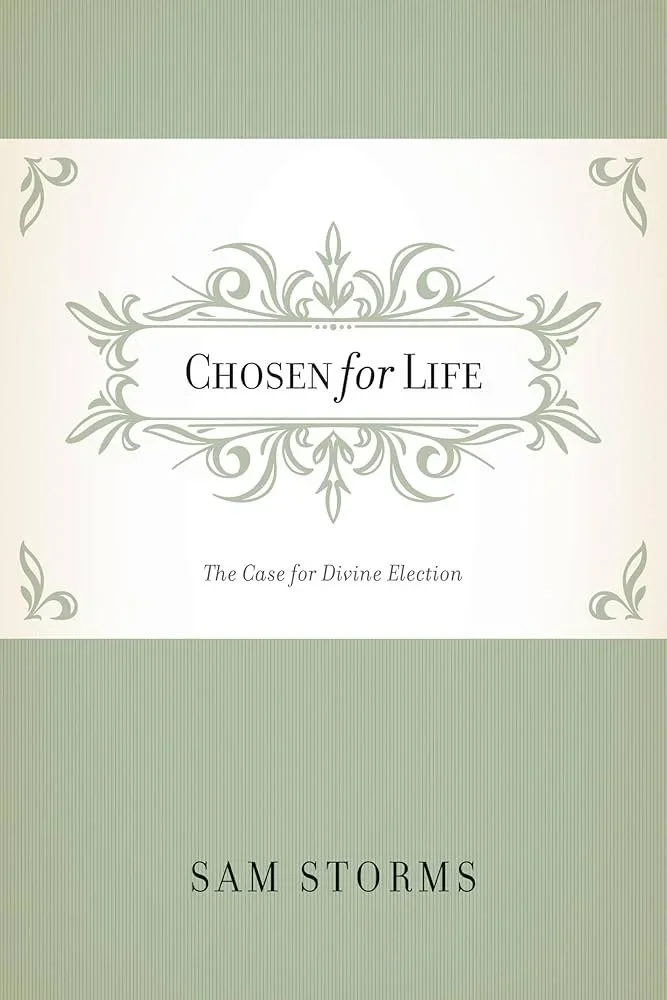
Chosen For Life: The case for divine election
by Sam Storms