SERMON SPOTLIGHT * 9/27/26
I want you to recall the moment you placed your faith in Jesus Christ for forgiveness and salvation. Got it? Now ask yourself: Why did I believe in Jesus while others reject him? Below is an outline summary of the sermon for your further study and deeper reflection.
SERIES: ROMANS: The Power of God in the Gospel of Jesus Christ
TEXT: Romans 9:6-13
TITLE: Chosen to Choose
PREACHER: Derek Overstreet
BIG IDEA: You believe in Jesus because God chose you to believe in Jesus.
POINTS:
I. Paul’s Thesis
II. Paul’s Proof
SERMON EXCERPTS:
All quotes and text emphasis are taken directly from the pastor’s notes.
“People sit in church for years. They hear the gospel preached repeatedly. They witness the gospel’s power lived out beautifully. They even embrace church life eagerly. Like you, they experience the gospel's privileges. Still, they reject Jesus. What’s the difference between you and them? Answer: God’s choice.”
“If you’re a Christian, it’s because God chose you to be a Christian. Being a Christian is about God’s choice before it’s about your choice. His choice leads to your choice. You were chosen to choose Jesus. That’s the focus of Romans 9—God’s sovereign and gracious choice.”
“Before we begin, today’s text is part two of eleven parts in Romans 9-11. In other words, it’s one brick in the wall of election. Don’t look for all your questions to be answered in a single sermon. Paul’s argument is progressive, so write down your questions along the way. Do some additional study. Ask a pastor. Stay engaged.”
“The first five verses pose a dilemma for Paul’s gospel. Although Israel possesses God's salvific promises, their rejection of Jesus seems to render those promises null and void. This is the source of Paul’s deep anguish in 1-3, which leads him to be willing to be cut off from Christ in their place, if that were possible. But Israel’s future doesn’t hinge on Paul’s selflessness; it hinges on God’s faithfulness. Naturally, the question is: Can we trust God to keep His word? To this Paul says—read 6.”
“Paul’s assertion here is that denying God’s faithfulness because Jews are cut off from Christ misunderstands God’s promises. The truth is, God never promised that every ethnic Israelite would be saved.”
“Paul makes this point three ways:
- 6—For not all who are descended from Israel belong to Israel
- 7—and not all are children of Abraham because they are his offspring
- 8—it is not the children of the flesh who are the children of God, but the children of the promise are counted as offspring”

“Paul’s assertion is significant. Salvation isn’t inherited biologically. An ethnic Jew isn’t equivalent to a child of God. Being born into Abraham's lineage doesn’t guarantee a place in God's kingdom. God never made that promise.”
“So Paul is clear: There is an Israel within Israel. Some embrace God’s promises, and some don’t. Those who respond to God inwardly (i.e., by faith in God and His promises, circumcised of the heart) are true Israelites to whom God’s promises belong. There are Jews who are physically children of Abraham, and there are Jews who are both physically and spiritually children of Abraham. The promise belongs to the latter.”
“Picture a circle representing everyone who has physically descended from Abraham. Ethnic Israel. Israel according to the flesh (8). Within that circle is a smaller circle representing Israel, according to God’s promise. It’s the remnant Paul will discuss later in the text. It’s the true Israel, the spiritual Israel, the chosen Israel, the Israel to whom God’s promises belong. This is why Paul can say God’s Word does not fail; not every ethnic Israelite belongs to God.”
“This is crucial because the gospel is at stake. If you can be saved by your bloodline, the blood Jesus shed is meaningless, and God’s promise to save by grace alone fails. To the contrary, Galatians 3 says: There is neither Jew nor Greek, there is neither slave nor free, there is no male and female, for you are all one in Christ Jesus. And if you are Christ’s, then you are Abraham’s offspring, heirs according to promise—(Galatians 3:28-29)”
“Paul doesn’t say that if you’re Abraham’s offspring, you’re in Christ and heirs to the promise. He says that if you’re in Christ, you’re Abraham’s offspring and heirs to the promise. That makes Jesus the ultimate fulfillment of God’s promise to Abraham. That makes the gospel the only way to heaven.”
“Unbeliever—Don’t spend money on Ancestry to dig up some Jewish blood. Turn to Jesus in repentance and faith.”
“So when Paul says in 4—some with privileges reject Jesus—it doesn’t mean God’s word has failed. If that’s your conclusion, you misunderstand God’s promise. God’s word is true and faithful in Christ Jesus. That’s the thesis. Now Paul gives the proof.”
“Paul goes back to the beginning of Abraham’s family to prove the point he has just made in 6-7. He has already let the cat out of the bag in 7 by quoting Genesis 21:12—Through Isaac shall your offspring be. But he expands on the importance of Isaac and Ishmael—read 7b-9.”
“If you remember, in Genesis 12 and 15, God promised Abraham that he would be the father of a great nation. But as Abraham and his barren wife, Sarah, grew older, his faith wavered. Instead of trusting God to keep His promise, Abraham took matters into his own hands and fathered a son with his wife’s servant, Hagar. She conceived and gave birth to Ishmael. Fast forward to Genesis 18, and we find Abraham asking God to make Ishmael the son of promise. The conversation went like this: Genesis 17:18-21”
“In these verses, God makes it clear to Abraham that although Ishmael is his physical son, he is not the son of promise. Isaac, not Ishmael, is the son of promise. The point is that receiving God’s promises is a matter of His choosing, not of ethnicity or bloodline. The promise of salvation is about God’s sovereign choice, not human effort or physical descent.”
“But Paul says, let’s go down another generation to Esau and Jacob for an even stronger argument—read 10-13. A few details to note here:
- (10) Unlike Isaac and Ishmael, who had different mothers (Ishmael’s mother, Hagar, was Egyptian, a Gentile), Jacob and Esau were twins with the same mother, Rebekah, and the same father, Isaac. All Israelites.
- (11) God made His choice when they were still in the womb, unable to do good or bad.
- (12) The statement that the older (Esau) will serve the younger (Jacob) is a reversal of order. In that culture, the firstborn held the position of honor and was the primary recipient of the inheritance.”
“Why are these details important? Because they prove God’s promises are not guaranteed by ethnicity, behavior, or birth order. Individual salvation comes by the sovereign and unconditional call of God—read 11.”
“Isaac, Ishmael, Jacob, and Esau were all physical descendants of Abraham, ethnic Israelites. All of them fit in that big circle. But only Isaac and Jacob fit in the inner circle, not because they deserved it or because of anything they had done, but simply because God sovereignly and mercifully called them to be children of His promises. As it says in 13.”
“We could translate this—Jacob I loved, Esau I rejected. Paul is not saying that God was filled with malice and loathing toward Esau. The point is that God chose Jacob, not Esau.”
“Both were undeserving sinners, yet God chose to set His divine affections on Jacob, not Esau. God’s love for Jacob was expressed in His unmerited grace and mercy. His hatred for Esau was expressed in His righteous and just rejection, both to the praise of His glory. More on that in the coming weeks!”
“God is faithful, and His word never fails. He chooses according to His electing purposes. Nothing can thwart those purposes. Everyone He chooses to be saved in Jesus Christ will be saved. Why are you a Christian? God chose you to choose His Son Jesus Christ. You believe in Jesus because God chose you to believe in Jesus. You were chosen to choose. As we will see next week, what a merciful God we belong to.”
APPLICATION:
How does this impact our daily walk with Jesus?
- We can personally rest in God’s electing purposes - Just as Isaac and Jacob received salvation not because of their race but because of God’s grace, so your salvation is by grace and nothing else. That’s not to diminish the importance and significance of faith. More on that in chapter 10.
Our temptation is to feel the need to earn God’s favor. We want to measure our identity in Christ by our intensity for Christ. We want to measure our standing with God by our sacrifice for God. If you struggle with condemnation, if your joy in Jesus ebbs and flows with your performance for Jesus, or if you think you just need to be better or do more, you’re not resting in the gospel; you’re trying to earn your way to God. It’s pure pride, and you need to repent of it now. Rest in knowing that if God chose you, He will be faithful to keep you—Romans 8:31-39!
We can trust God with His electing purposes - One of the hardest things is seeing those we love reject Jesus. A natural question is—Why doesn’t God save them? 1-5 reveal Paul’s personal anguish over his fellow Jews who didn’t know Jesus. Yet he never gave up. When he visited a city, he always took the gospel to the synagogues first. We shouldn’t either.
First, don’t assume God won’t save your loved ones, no matter how many times they have rejected the gospel. As long as they are breathing, their redemptive story is unfolding. God’s chosen are faceless to us.
Second, no matter how much you love the unsaved person in your life, don’t think they deserve God’s love. They don’t. They are sinners who deserve God’s eternal judgment—just as you were. God’s rejection of Ishmael and Esau was righteous and deserved. God isn’t unjust in not saving your loved one. Pray that He will save them. Share Jesus with them. Don’t give up on them. But trust God with His electing purposes. As we will see in the coming weeks—He alone is God!
ADDITIONAL SCRIPTURE:
Romans 2:28-29
QUOTES:
Douglas Moo - “Love and hate are not here, then, emotions that God feels but actions that He carries out.”
SCRIPTURE MEMORIZATION:
Romans 8 (entire chapter)
SONGS FROM THIS SUNDAY:
Sing
Here Is Love
It's Your Grace
God Is Faithful (Psalm 114)
All Things
NEXT WEEK’S PASSAGE:
Romans 9:14-18
THE BOOK OF THE QUARTER:
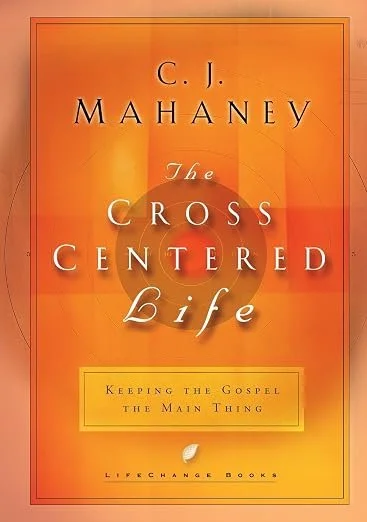
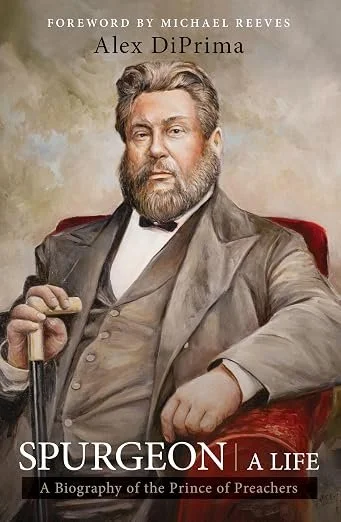
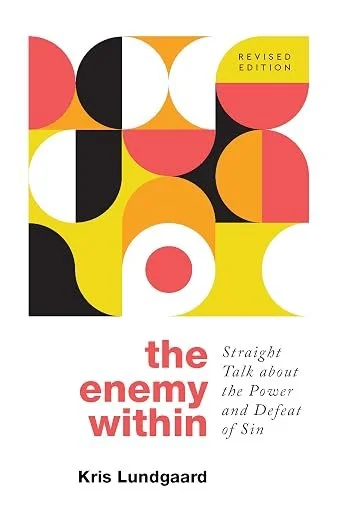
CLICK BELOW TO PURCHASE ONE OF OUR BOOKS OF THE QUARTER: