
SERMON SPOTLIGHT * 11/01/26
Scripture never blames God for our unbelief; it always and only blames us. This is what makes salvation a paradox. The mystery of God’s sovereignty and man’s responsibility. Nowhere is that clearer than in this section of Romans. Below is an outline summary of the sermon for your further study and deeper reflection.
SERIES: Romans: The Power of God in the Gospel of Jesus Christ
TEXT: Romans 9:30-10:4
TITLE: Why Don’t They Believe?
PREACHER: Derek Overstreet
BIG IDEA: Relying on your goodness is rejecting God’s grace.
POINTS:
I. They Rely on Their Own Righteousness
II. They Reject the Only One Truly Righteous
SERMON EXCERPTS:
All quotes and text emphasis are taken directly from the pastor’s notes.
“Why don’t they believe? We’ve all asked that about family and friends we’re trying to reach with Christ. It’s a good question. It’s a hard question. Here’s another question: Who do you blame for their unbelief? You love. You pray. You share. But they keep rejecting Jesus. Who do you blame? Here’s who you can’t blame: God. Scripture never blames God for our unbelief; it always and only blames us.”
“This is what makes salvation a paradox. The mystery of God’s sovereignty and man’s responsibility. Nowhere is that clearer than in this section of Romans.”
“Romans 9 opens with Paul expressing grief and anguish over his lost Jewish kinsmen. Despite having all the spiritual advantages, they missed and rejected Jesus. Since then, Paul has focused on God’s sovereignty in choosing, calling, and mercifully saving sinners. So what Paul does next may surprise you. In today’s text, he lays all the blame for Israel’s unbelief on them, specifically their pride.”
“In today’s text, Paul shifts from God’s initiative to our response. Chapter 9 focuses on God’s choice and grace, while chapter 10 focuses on our response and faith.”
“Here’s today’s message: Relying on your goodness is rejecting God’s grace. This was Israel’s error—they relied on their own righteousness and, in doing so, rejected Christ. This matters to us because self-reliance isn't uniquely Jewish; it’s deeply human. You may think you’re good enough for God, but you’re not. No one has ever been good enough for God; no one is, and no one ever will be. This is the hardest reality to accept, yet apart from it, there is no hope of salvation.”

“Paul concludes this section with another question—What then shall we say to this? This question reveals the upside-down nature of God’s kingdom. The Jews who pursued righteousness religiously never obtained it, but the Gentiles, those godless, pagan Gentiles who didn’t pursue righteousness, received it. How is that possible? The difference lies in faith—read 30.”
“The Gentiles didn’t pursue the law, yet attained righteousness, not by the works of their hands but by faith in Jesus when they heard the gospel.”
“Israel pursued the law to attain righteousness, not by faith in Jesus but by obedience to the law, even after hearing the gospel. The Jews believed that pursuing the law of Moses with passion and dedication would lead to righteousness. They approached God through their own works rather than through faith in their hearts. They turned the law, meant to be a response to God’s love, into a system of performance to earn God’s favor. They had commitment. They had conviction. They had zeal. Look down at 10:2—read 2-3. Paul says the Jews’ problem isn’t a lack of zeal for God. They are excited about God. They are dedicated to God. They are fanatics for God. They are the people at the football game with painted faces and crazy outfits. Zeal is extreme enthusiasm. Who doesn’t want to be extremely enthusiastic about God? I hope we all want to be more enthusiastic about God. Paul says zeal wasn’t the problem. The problem is that no matter how intensely the zeal burns, it can’t save.”
“This is what Jesus repeatedly excoriated the Pharisees for. In their religious zeal, they kept the law and many other rules with sincerity and commitment, yet they lacked faith in Jesus. As Paul says in 3—their zeal was without knowledge; that is, it was apart from Christ as their only righteousness before God. Again, this isn’t a Jewish problem; this is a human problem.”
ILLUSTRATION: Are you Good Enough tract
“Christianity isn’t about morality. Good morals are the fruit of a Christian life, not its foundation. As James 2 says, genuine faith is always marked by godly fruit. But the Christian life isn't about trusting ourselves for righteousness; it’s about finding righteousness outside ourselves in Jesus Christ. We pursue a person, not a condition. This is what sets the Christian faith apart from all others.”
“This is ultimately what they missed, and it’s what we can miss, even as believers. Spiritual zeal should characterize us. But our zeal for good and worthy things—theology, parenting, marriage, the local church, generosity, church planting, Bible study, church history, evangelism, sexual purity, hospitality—we could keep going. None of it matters if it’s not rooted in, informed by, and ultimately an outpouring of joy and gratitude for the justifying grace made possible by Jesus' perfect righteousness on our behalf in the gospel.”
“Equally dangerous is to pursue knowledge without zeal. God’s desire is that what’s in our heads pours down into our hearts, creating a life of love, obedience, and worship. More on that in chapter 12.”
“Zeal and knowledge must always go together. Which spiritual pitfall are you most vulnerable to: Zeal without knowledge or knowledge without zeal? Both are dangerously misguided. Take it to the Lord in prayer.”
“The Jews’ problem was not merely moral—it was Christological. By trusting in their own righteousness, they rejected the only one truly righteous—Jesus. To show this, Paul quotes the prophet Isaiah. Paul’s words combine Isaiah 8:14 and 28:16. The context concerns where Israel finds safety. Will the rebellious leaders put their hope in themselves or in God? Taken together, the message is that those who trust in themselves and reject God will be destroyed, while those who trust in God’s provision as the Rock will be safe from His judgment.”
“Paul knew Isaiah was preaching Christ (so did Peter, who cited the same passages in 1 Peter 2). Isaiah's words are messianic, pointing to the coming of Jesus, who is the Rock. All who believe in Jesus as their rock of righteousness are saved and safe. But those who try to be their own rock of righteousness will only receive the rock of judgment.”
“Jesus is the Rock, the cornerstone, and the foundation of salvation that God Himself laid. No other foundation can be laid, especially not by us through works. Jesus submitted Himself to His Father’s will and became the stone the builders rejected, enabling others to receive Him by faith and to stand righteous before God.”
“This is what separates Christianity from all other religions. The foundation is not what we can do but what Christ has done. Apart from Jesus, there is no righteousness before God, only condemnation. Jesus is our righteousness. This is Paul’s point in 4.”
ILLUSTRATION: Bucee’s Billboard Campaign
“When Paul says Christ is the end of the law, he doesn’t mean Jesus cancels the law; he means Jesus fulfills it. Jesus was clear about this in Matthew 5:17-20 when he said, “I did not come to abolish the law but to fulfill it.” The law was never an end in itself. Like the Bucee’s signs, the law is a billboard pointing us to Christ so that when we arrive, we can stop driving and start living in the good of who He is and what He has done as our Rock of righteousness.”
“Here is where the stumbling comes in. We want to be self-made. We think we can be good enough for God. Don’t tell me I’m not the captain of my ship. Don’t undermine my ability by saying I’m dependent on someone else. But that’s exactly what the gospel does. It says—I can’t, but you can, Jesus. This is why the cross had to happen and why people stumble over it. If I can gain righteousness that makes me right with God through obedience, then Jesus’ death is in vain, the cross is worthless, and the gospel is a farce. But the gospel isn’t a farce because it proves we can't save ourselves. Therein lies the stumbling and offense.”
“Nothing pulverizes our pride like spiritual inability. Yet everyone must decide how to respond to Jesus. Will you reject him and keep trying to make your own way to God, or receive him by faith as your Rock of righteousness?”
“If you are not a Christian, neither being good enough nor being spiritual enough will make you right with God. Faith in Jesus is your only option. He is not an option. He is where the story has always headed. Today you are at a crossroads: Will you trust in him and be saved, or trust in yourself and remain lost?”
“For the Christian, the question is this: Am I fully trusting in Christ? It’s possible to be saved yet quietly resting in your spiritual performance. As Paul rebuked the Galatians: Are you so foolish? Having begun by the Spirit, are you now being perfected by the flesh? (Galatians 3:3)”
QUOTES:
Christopher Ash - “Paul turns his camera from viewing grace from God’s angle, to viewing it from our point of view.”
John Stott - “To make this humiliating confession is an intolerable offense to our pride. So instead of humbling ourselves, we stumble over the stumbling-stone.”
APPLICATION:
Are you trying to perfect with your hands what the Spirit began in your heart? Here are some evaluative questions:
Does Christian living seem dutiful?
Is gospel joy, that is, joy rooted in and motivated by Christ’s forgiving and justifying love for me, elusive in my life?
Am I characterized by looking down on others, especially in spiritual matters?
Am I always telling myself that I just need to do better or more?
Is condemnation a common struggle?
Does my spiritual zeal burn hottest for my spiritual rules and methods?
If you said YES to just one of those, this message is for you. Jesus is not the reward for your righteousness; he is your righteousness. Jesus cried—It is finished—from the cross, and he meant it. When this reality lays hold of you, the obedience of your faith becomes the grateful worship from your heart, and your joy soars to heights previously unknown.
SCRIPTURE MEMORIZATION:
Romans 8 (entire chapter)
SONGS FROM THIS SUNDAY:
Christ Our Glory
In Christ Alone
Glorious Christ
The Saving One
All Sufficient Merit
NEXT WEEK’S PASSAGE:
Romans 10:4-13
THE BOOK OF THE QUARTER:
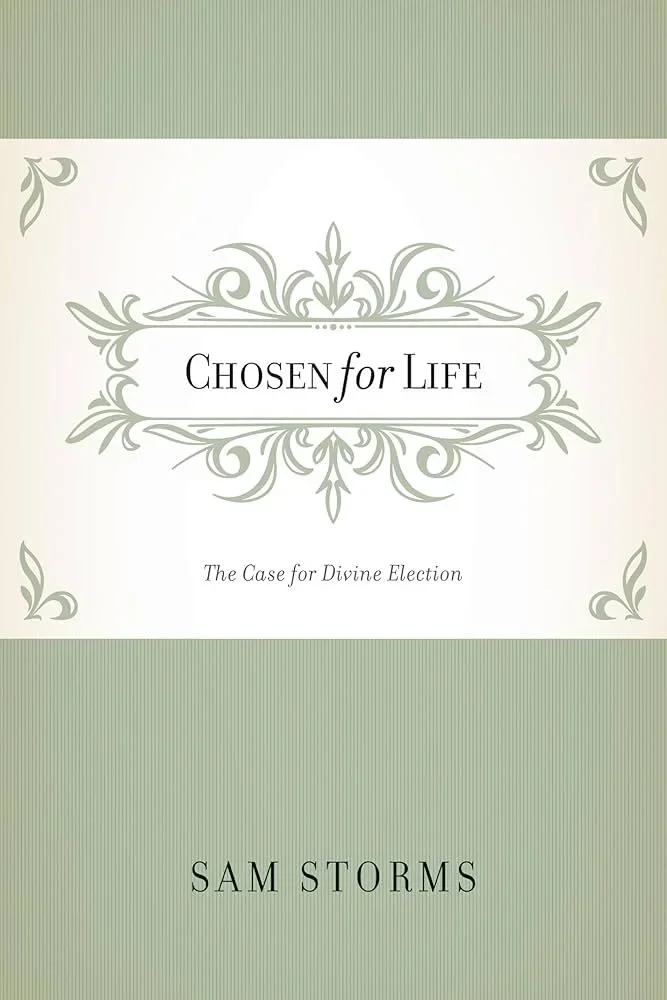
Chosen For Life: The case for divine election
by Sam Storms