
SERMON SPOTLIGHT * 4/12/26
A few weeks ago, we looked at how and when Abraham was saved in 4:1-12. Today, we take a deeper look at the nature of his faith. Below is an outline summary of the sermon for your further study and deeper reflection.
SERIES: Romans: The Power of God in the Gospel of Christ
TEXT: Romans 4:13-25
TITLE: The Saving Faith of Abraham, Part 2
PREACHER: Derek Overstreet
BIG IDEA: Taking God at His Word about His Son is the only way to be counted righteous in His eyes.
POINTS:
I. The Wrong and Right Path to Righteousness
II. The Faith that Leads to Righteousness
SERMON EXCERPTS:
All quotes and text emphasis are taken directly from the pastor’s notes.
“In Romans 4, some form of the phrase—counted to him as righteousness—appears five times. In today’s passage, it serves as Paul’s grand conclusion about justification by faith.”
“In life, there are only two paths that truly matter: be counted righteous in the eyes of God or face God’s wrath. Ultimately, that’s it. This means everyone must answer the question—How can I be counted righteous?”
“Questions like Who will I marry? What career will I pursue? Where will I live? Which church will be my church? When will I buy the motorcycle? These are among some of the biggest questions you will ever need to answer. Okay, maybe not the last one. No question is bigger or more urgent than How can I be counted righteous?”
“Through the example of Abraham, Romans 4 puts us on the right path. A few weeks ago, we looked at how and when Abraham was saved in 4:1-12. Today, we take a deeper look at the nature of his faith. Here’s what we will find: Taking God at His Word about His Son is the only way to be counted righteous in His eyes.”
“Our righteousness doesn't come through our own efforts; it comes by grace through trusting in what God has accomplished in Christ. I think we can all say Amen to that! Here’s the problem: In our pride, we think becoming righteous is about our own efforts and virtue. Like a smuggler sneaking drugs across the border, we try to smuggle character and works into God’s throne room. We end up applying the old adage—If it’s to be, it’s up to me—to our relationship with God. Paul says that’s the wrong path. The only right path is: Taking God at His Word about His Son is the only way to be counted righteous in His eyes.”
“At the heart of our text today is a promise. It’s mentioned five times and is a big promise. In 17/18, Paul described the promise to Abraham that he would become the father of many nations. You can see this promise unfold in Genesis 12, 15, 17, and 22. It’s a monumental promise that extends far beyond physical land and kin. As we will see today, it has eternal ambitions and heavenly implications.”
“Here’s the question right now: How did Abraham receive the promise? There are only two ways to receive God’s promise: Abraham earns it through obedience, making it a reward, or he receives it as a gift by trusting God. Those are the only options available to us. So which is correct?”
“The Wrong Path—Paul says that if you choose the law, you lose. In 14, he says that when we pursue righteousness through our own efforts, we render faith irrelevant and make the promise unattainable. Why? Because the law doesn’t lead to the promise; it leads to God’s wrath. It can’t make us righteous because it reveals our sinfulness—read 15”
“A transgression is the violation of an explicit command, in this context, the Mosaic Law. Paul’s point here is not that sin was absent in Abraham’s day. In 5:13, Paul says sin was in the world before the law. His point is, now that the law has been given, we stand even more guilty and unable to be saved by it.”
ILLUSTRATION: Trespassing (wrong to trespass, but doubly guilty if I willfully walk right by a No Trespassing sign)
“The pursuit of righteousness through the law is doomed from the start. Every command we try to keep only highlights how short we fall. This approach will never work. As Paul has already said in 3:19—By works of the law no human being will be justified in his sight, since through the law comes knowledge of sin.”

“The Right Path—Abraham received God’s promise through faith. What is faith? Faith is trusting God. God promised to give him a son and make him the father of many nations, and Abraham believed God—read 18”
“That’s faith—taking God at His word. Saving faith is trusting what God did through the person and work of Jesus to save you. Faith is not a virtuous disposition or personal accomplishment. It’s not a work. It’s trusting God. Remember the water bottle from a few weeks ago. Faith is the instrument by which I receive the gospel for salvation. If faith is receiving instead of doing, then the promise rests not on personal merit but on unmerited grace.”
“Just as righteousness through the law is linked to condemnation and wrath, faith is linked to grace and assurance. We know what grace is. It is the unmerited favor of God. We can’t earn it. We don’t deserve it. It comes to us through faith. We hold out our empty, undeserving hands for God’s gift of Jesus Christ. It’s the only way to be counted righteous before God.”
“This is why being counted as righteous alongside Abraham is guaranteed: like Abraham, it rests on God’s everlasting and unfailing grace, received through faith, not on anything we do or become.”
“Abraham believed God’s promise—’So shall your offspring be’ was God’s promise to Abraham in Genesis 15. One can imagine Abraham, wrinkled, weathered, and childless, standing and staring up at the stars that God likened to his offspring, saying—I know I’m 100. I know my wife is 90. I know her womb has never known life. I know this seems impossible. But it’s not. My hope is in God.”
“Abraham’s physical weakness didn’t weaken his faith. At his age and under his circumstances, Abraham had every reason to waver in his faith and to doubt God. Instead, he believed God. And while Abraham’s faith wasn’t perfect, just read Gen 12-25, 20 says he grew strong in his faith. How by persevering and persisting in trusting God.”
“That’s what it means to live by faith, not sight. The context is salvation—Justification by faith alone. But as Paul said in 1:17, we aren’t merely justified by faith; we live by faith. Living by faith means that even when our circumstances seem to defy God’s promises, we cling to them.”
RUNNING APPLICATION: Which promise do you need to cling to today?
Colossians 2:14— All your sins have been nailed to the cross
Hebrews 13:5—I will never leave you nor forsake you
Romans 8:28—I am working all things for your good
Romans 8:32— If God gave His only Son for you, will He not supply all you need?
Romans 8:39—Nothing can separate you from the love of God in Christ
“Abraham believed God’s promise because of what He believed about God. Far from being a mere abstraction, Abraham’s faith was rooted in his vision of God.”
“Abraham believed in a powerful God, the God who gives life to the dead and calls into existence the things that do not exist. Abraham and Sarah’s childbearing abilities were dead, but Abraham believed God could do the impossible—infuse life into her womb through His resurrecting power. Abraham believed in what was yet to exist—a son—God was able to bring into existence. What was impossible for him to do, Abraham believed God could and would do. Abraham’s faith was God-centered.”
“We see this even in the text’s structure. In 17, we read that the promise Giver is the God who gives life to the dead and calls into existence things that do not exist. Then 21 says—Abraham was fully convinced that God was able to do what He promised. Between these towering bookends of God’s power lie Abraham’s physical weakness and inability. It’s Abraham’s faith that connects his weakness to God’s power—Faith. Don’t overlook the importance of what Paul is saying here: Faith isn't primarily about the strength of our trust; it's about the character of the One we trust.”
“Now, notice the result of Abraham’s faith. Despite the whirlwind of impossible circumstances, Abraham staked his hope on God's promise, trusting the God of the promise. As a result, Abraham’s faith glorified God. How? Faith turns away from self in absolute need and dependence on God.”
“Here's Paul's point: Through faith, God credited Abraham with righteousness that was not his own. He didn’t earn it; he received God’s promise by faith, and it was counted to him as righteousness, thereby justifying him by faith alone in the sight of God.”
“So what does an old man's ancient faith have to do with us? Everything! This truth isn't just for Abraham; it's for us too.”
“What happened to Abraham when he believed God's promise points us to the gospel, the ultimate fulfillment of God’s promise to Abraham. We have our place in that promise. God began to fulfill His promise to Abraham with the birth of Isaac, then through Jacob, and ultimately in Christ, who created a new humanity through the gospel—a spiritual family that begins with Abraham and will reign with Christ in the new heaven and earth. For Christians, that’s our promise, the promise of heaven.”
“The same God who gave life to Isaac from Sarah's dead womb is the same God who raised Jesus from the dead, so that Jesus may give life to spiritually dead sinners like you and me.”
“When we believe that Jesus died to atone for all our sins, that his resurrection proves the penalty has been paid in full, and that God has accepted that payment, turning His wrath away from us, God credits us with Christ's righteousness, and we stand justified in His sight. Not because of anything we have done, but only because of all that Jesus has done. That comes with a heavenly guarantee!”
APPLICATION:
How does Romans 4 need to lay hold of your heart?
Q. Are you curious about how to be right with God? Don't put your trust in your own efforts of obedience—Believe in Jesus and his righteousness.
Q. Are you tempted to despair because of the condemnation that tells you, Just do more and do it better? Allow your condemnation to lead you to repentance and be replaced by the conviction of the Holy Spirit, and focus on the sufficiency of the gospel. At the cross, Jesus said, It is Finished, and in the empty tomb, God said, It is accepted!
Q. Are you doubting God’s love for you? Don't focus on the size of your faith—focus on His provision at the cross, where true, unfailing, eternal love is revealed.
Q. Do your circumstances seem impossible? Don’t look for new solutions—look to the one who raised Christ from the dead, promises to never leave you or forsake you, to work all things together for your good, and to bring you safely home one day.
QUOTES:
James Montgomery Boice - “We are not saved because we have a strong subjective faith (that would focus the matter on us), but because we believe the promises of God regarding salvation, promises made known to us in the pages of the Bible. In other words, Christian faith is a Bible faith. Or, to put it in still other words, we are saved not because of our faith but because of God’s promises. True faith is receiving these promises and believing them on the basis of God’s character.”
John Calvin - “Let us also remember, that the condition of us all is the same with that of Abraham. All things around us are in opposition to the promises of God: He promises immortality; we are surrounded with mortality and corruption: he declares that he counts us just; we are covered with sins: He testifies that he is propitious and kind to us; outward judgments threaten his wrath. What then is to be done? We must with closed eyes pass by ourselves and all things connected with us, that nothing may hinder or prevent us from believing that God is true.”
Christopher Ash - “We ought to emerge from Romans 4:13-25 with a strong confidence in God's power to do what he has promised to do, and to do it entirely by grace. We ought to let go of even the 1 percent of our works in which we have put our trust. Only in a Christianity that is 100 percent grace can we rest secure and know we have nothing to prove and nothing to hide.”
SCRIPTURE MEMORIZATION:
Romans 3:20-26
SONGS FROM THIS SUNDAY:
How Vast The Love
Come Thou Fount
All Sufficient Merit
I Will Glory In My Redeemer
NEXT WEEK’S PASSAGE:
Romans 5:1-2
THE BOOK OF THE QUARTER:
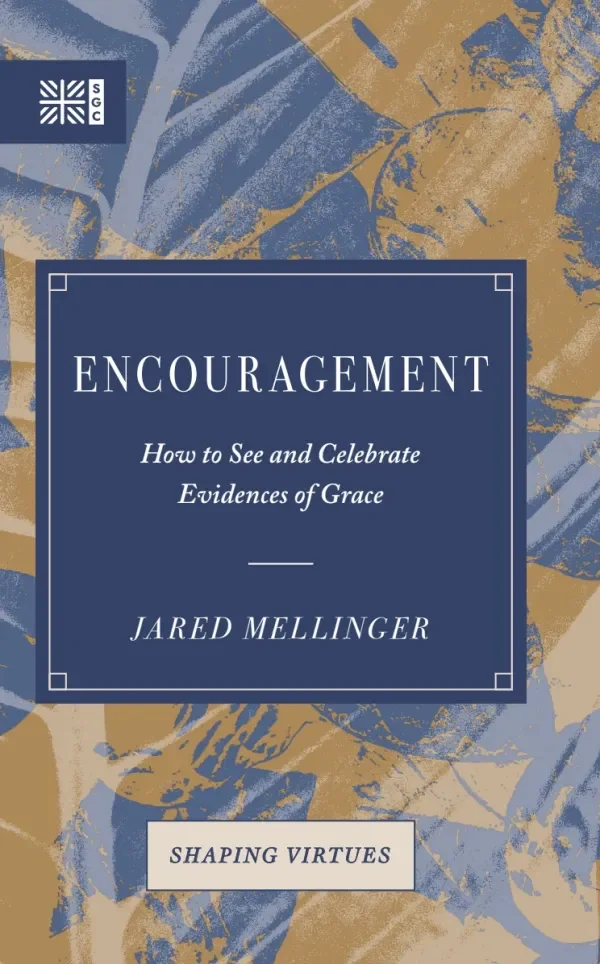
CLICK BELOW TO PURCHASE OUR BOOK OF THE QUARTER:
“Encouragement: How to See and Celebrate Evidences of Grace” - Jared Mellinger